🛡️
Ethos
Persuading by establishing trust or authority
These three appeals form the foundation of persuasion: ethos establishes credibility, pathos connects emotionally, and logos provides logical reasoning.
Ethos, pathos, and logos are rhetorical appeals used to persuade. Ethos focuses on credibility, pathos appeals to emotion, and logos relies on logic and evidence.
Persuading by establishing trust or authority
Persuading by appealing to emotion
Persuading through reasoning and facts
Understanding the roots of rhetorical appeals
/ˈiːθɒs/ (EE-thos)
ἦθος (ēthos) - "character, custom, habit"
"The character of the speaker as it appears to the audience"
/ˈpeɪθɒs/ (PAY-thos)
πάθος (pathos) - "suffering, experience, emotion"
"Putting the audience in the right frame of mind"
/ˈloʊɡɒs/ (LOH-gos)
λόγος (logos) - "word, reason, discourse"
"The argument itself, by showing or seeming to show something"
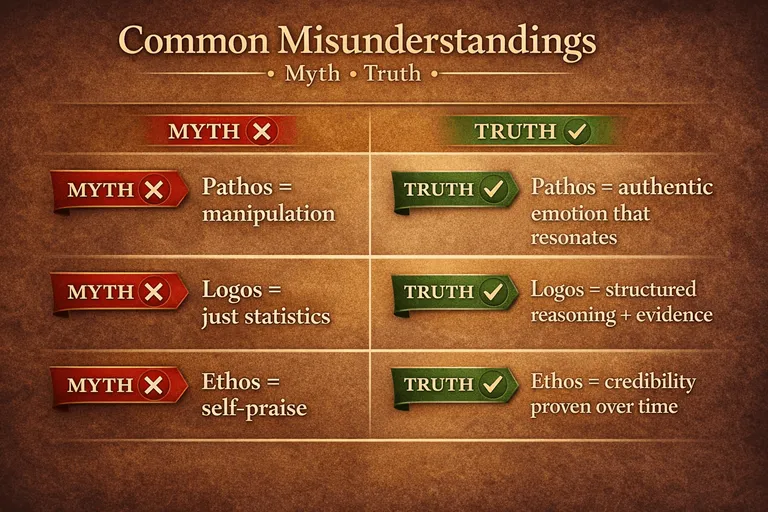
Pathos is about authentic emotional connection, not manipulation. Effective pathos resonates with genuine feelings and values without distorting truth.
Logos is structured reasoning, not just numbers. It includes logical arguments, cause-and-effect relationships, and clear reasoning patterns beyond raw data.
Ethos is perceived credibility, not boasting. It comes from demonstrated expertise, consistent quality, and third-party validation rather than self-promotion.
Choose the right appeal for your context
Establishing credibility with new audiences
Creating immediate emotional connection
Data-driven decision makers