
A lot of logos look great on a mockup, then underperform in the real places that matter: website headers, app icons, ads, and social profiles. The gap is usually not taste – it is persuasion. Your logo is a one-second signal that removes resistance (or creates it).In modern branding, ethos pathos logos logo design is a powerful framework for building logos that convert visitors into users.
Quick answer
A logo converts when it strongly signals one primary lever – Ethos (trust), Pathos (emotion/identity), or Logos (clarity/logic) – and supports it with the other two. If you try to communicate everything at once, you often end up with a logo that says nothing.
Generate logo options now: AILogoCreator
What you will get in this guide
- A decision tree to choose Ethos-first vs Pathos-first vs Logos-first
- Design cues that translate persuasion into shapes, type, and structure
- Copy-paste prompts (3 scenarios) that avoid template-looking results
- A 10-minute workflow to ship a usable logo across touchpoints
- A one-minute logo audit checklist + FAQ (with schema)
Why “good-looking” logos fail in real life
Most early-stage brands do not have a logo problem – they have a signal problem. Common failure modes:
- Looks generic at a glance (no distinctive concept or construction discipline).
- Falls apart at small sizes (favicon/app icon).
- Sends the wrong cue for the category (too playful for finance, too stiff for lifestyle, etc.).
- Does not match the product experience (pricing, UI, tone).
- Tries to express trust + fun + innovation + luxury all at once.
Related: Rhetoric basics • Ethos vs Pathos vs Logos
Definitions (the only version you need)
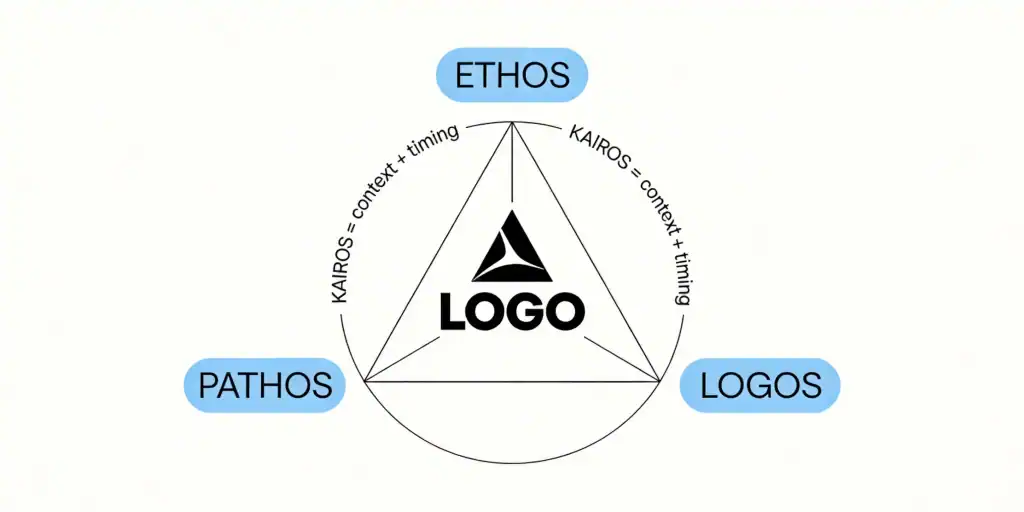
- Ethos: credibility and trust. The “are you legit?” signal.
- Pathos: emotion and identity. The “do I care?” signal.
- Logos: clarity and logic. The “what is this and why does it make sense?” signal.
- Kairos: timing and context. The “right message for this moment” signal.
Go deeper: Definitions page • Examples library
Choose your primary lever (fast decision tree)
Answer these in order:
- What are you really selling first: reassurance, belonging, or results?
- What is the #1 fear a first-time visitor has?
- If you had to win in one second, would you rather be trusted, loved, or understood?
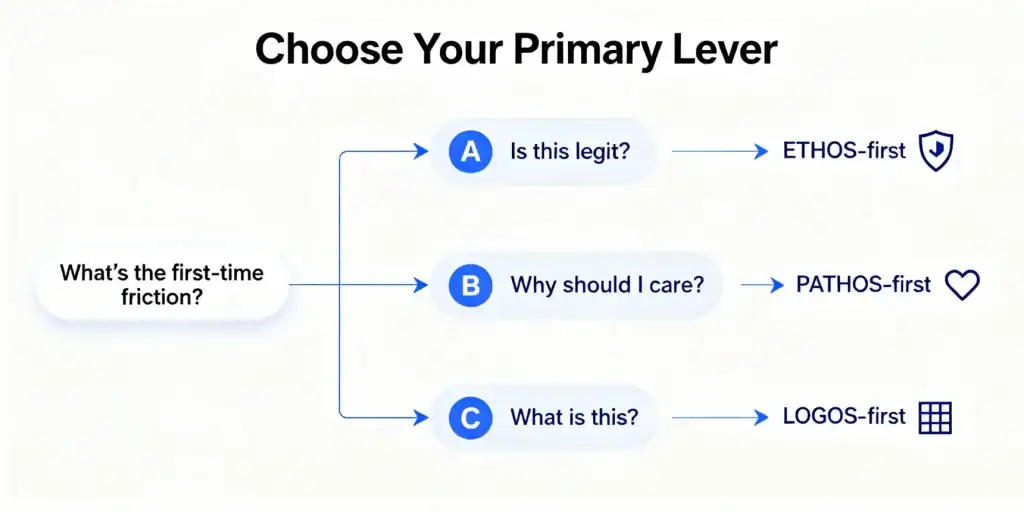
Quick mapping:
- If the hesitation is “Is this legit?” -> Ethos-first
- If the hesitation is “Why should I care?” -> Pathos-first
- If the hesitation is “What is this / how does it work?” -> Logos-first
Related: Ethos/Pathos/Logos hub
Translate persuasion into design choices
| Lever | Must signal | Practical design moves | Common mistake |
| Ethos (Trust) | stability, competence, safety | symmetry/alignment, highly legible type, restrained shapes, controlled palette, consistent spacing | generic corporate mark, overly complex seal, low legibility |
| Pathos (Emotion) | warmth, energy, calm, premium identity | friendly silhouette, one memorable motif, cohesive mood palette, approachable type, distinct but simple icon | cute but unclear; trendy look that ages fast |
| Logos (Clarity) | structure, systems, thoughtfulness | modular geometry, grid-based construction, hierarchy, contrast, strong small-size legibility | abstract with no discipline; too thin/fragile at 16-32px |
Copy-paste prompts to generate better logos (3 scenarios)
Tip: Replace [BRAND NAME] and adjust 1-2 constraints (industry + vibe). Keep the primary lever explicit to avoid template-looking results.
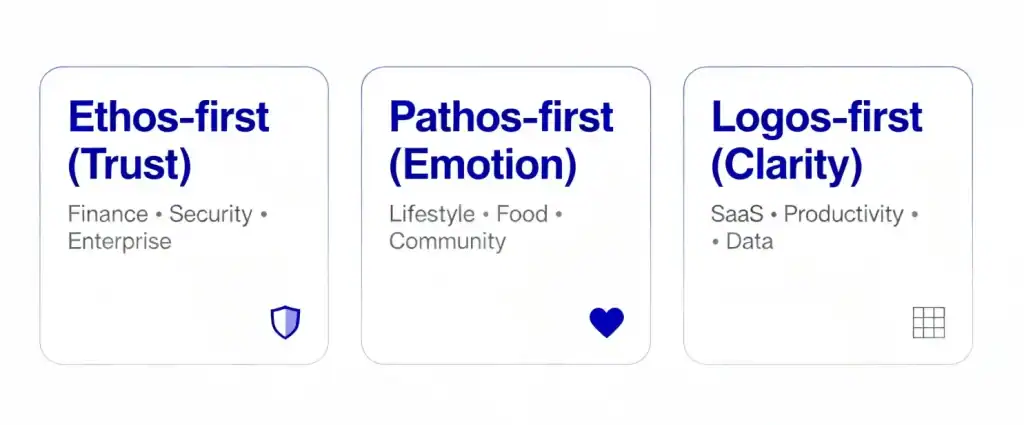
| Scenario A: Finance / security / enterprise (Ethos-first) Positioning: Make customers feel safe trusting you with something important. Prompt: Create a logo for [BRAND NAME] that prioritizes credibility and professionalism. Keep it clean and symmetrical, with balanced geometry, generous whitespace, and a highly readable wordmark. The mark should feel stable, secure, and trustworthy; suitable for a website header, business cards, and small sizes. Best for: payments, cybersecurity, compliance, B2B services Avoid if: you need playful/shareable vibes more than trust Generate from this prompt: AILogoCreator |
| Scenario B: Lifestyle / food / community (Pathos-first) Positioning: Make people feel something, then make them want to share it. Prompt: Create a logo for [BRAND NAME] that sparks emotional connection and identity. Use a warm, friendly silhouette (not childish), an expressive but simple icon, and a cohesive mood. The design should feel approachable and memorable; optimized for social avatars, packaging, and merch. Best for: creators, consumer brands, cafes, communities Avoid if: you must establish safety/legitimacy first (money/health/security) Generate from this prompt: AILogoCreator |
| Scenario C: SaaS / productivity / data products (Logos-first) Positioning: Make the product feel clear, efficient, and thoughtfully built. Prompt: Create a logo for [BRAND NAME] that communicates clarity, structure, and efficiency. Use modular geometry, grid-like construction, and high legibility at small sizes. The style should be modern and minimal, suitable for an app icon, UI header, and pitch deck. Best for: apps, tools, dashboards, B2B SaaS Avoid if: your core differentiator is emotional community/identity (Pathos-first likely wins) Generate from this prompt: AILogoCreator |
Need more inspiration: Examples library • Ads & commercials examples
A 10-minute workflow (from persuasion to a usable logo)
- Choose your primary lever (Ethos/Pathos/Logos) and write a one-sentence promise.
- Generate 12-30 variations. Save only 2-3 directions (do not over-edit early).
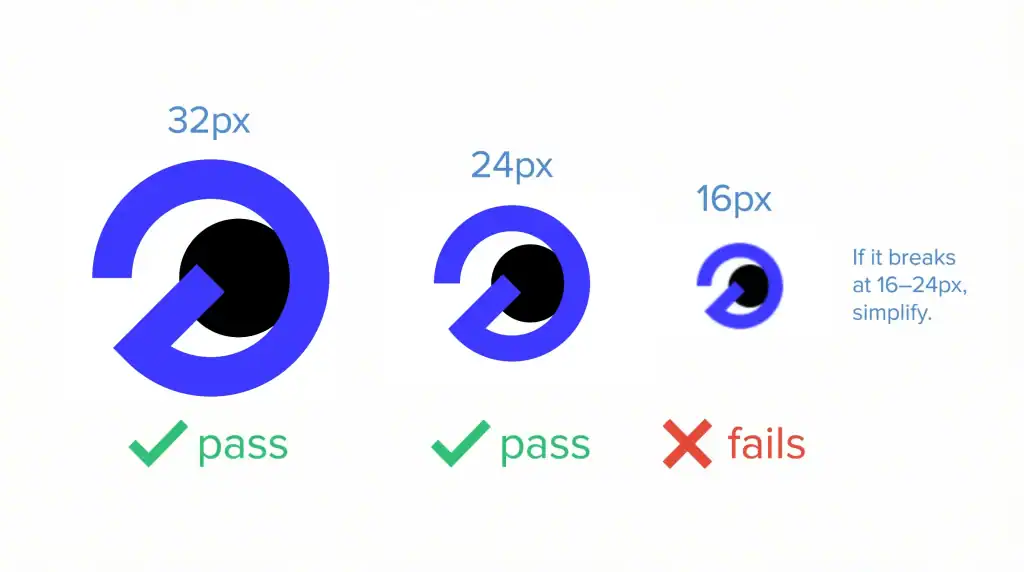
- Small-size test at 32px, then 24px. If it does not read, simplify.
- Unify typography + spacing. Consistency beats cleverness.
- Preview in context using mockups (header, social avatar, app icon).
- If you use ads/video, add subtle motion for professional polish.
- Export the formats you need (PNG/SVG) and keep a tidy handoff folder.
Tools: AI Logo Mockup • AI Logo Animation
One-minute logo audit (before you ship)
Use this checklist to catch “looks nice but does not convert” problems fast.
Ethos check (trust)
- Would this look legitimate on a homepage header today?
- Does it stay crisp and readable at small sizes?
- Do spacing and alignment feel controlled (not improvised)?
Pathos check (emotion)
- Do you feel a clear emotion (warmth, energy, calm, premium)?
- Is there one memorable motif someone could describe?
- Does it feel like the kind of brand your audience wants to be part of?
Logos check (clarity)
- Is it instantly readable (not visually busy)?
- Does it feel structured – like the brand thinks in systems?
- If it is abstract, is the construction excellent enough to justify abstraction?
Do not ignore Kairos (context): timing changes what works
Many “logo problems” are actually timing problems. If you are rebuilding trust, lead with Ethos-first cues. If you are entering a crowded consumer category, Pathos must be unmistakable. If you are shifting to mobile-first, Logos (small-size clarity) becomes non-negotiable.
Related: Kairos guide • Worksheet
FAQ
Do I need all three: Ethos, Pathos, and Logos?
No. Most strong brands lead with one primary lever and support it with the others. Trying to communicate everything at once usually creates a logo with no focus.
Can a logo communicate Logos (logic), or is that just copywriting?
Yes. Logos shows up as structure: grid-based construction, hierarchy, consistent spacing, and small-size legibility. Those cues signal “thoughtful and systematic”.
Why do many AI-generated logos look template-like?
Because prompts are vague (for example: minimal, modern, premium) and do not specify the persuasion goal. Add the primary lever, the context, and the usage constraints (favicon/social/packaging).
Should I define positioning before designing a logo?
Yes. Start with a one-sentence promise. Your logo is a compressed visual version of that promise.
What is the fastest way to get usable brand assets?
Generate a few strong directions, test at small sizes, preview in mockups, then export. If you use ads/video, add subtle motion for polish.
| Ready to generate logos that actually signal something? Pick your primary lever (Ethos / Pathos / Logos), paste a prompt from this guide, generate options, then keep only the directions that pass the 32px test. Primary action: Generate My Logo |
CommentsTake the first comment