
Mastering the art of advanced type design allows you to control the immediate emotional response of your audience before they even read a single word. If you are a founder or creative director aiming to build a distinct visual identity, understanding the subtle mechanics of type is non-negotiable. In a digital environment saturated with noise, brand typography and font psychology act as the silent ambassadors of your business, carrying the weight of your message through shape, motion, and weight.
- Kinetic typography transforms static messages into living narratives that capture attention and guide user experience.
- Variable fonts offer a responsive solution that adapts brand voice seamlessly across different devices and contexts.
- Custom typefaces separate generic businesses from memorable brands by embedding unique personality traits into every character.
- Advanced tools and AI are now democratizing high-end type design, making professional visual identity accessible to more creators.
The Hidden Psychology Behind Every Curve and Serif
I often see brands obsess over color palettes while treating typography as an afterthought. This is a mistake. Font psychology is not pseudoscience; it is a measurable influence on human perception. When you choose a font, you are choosing the “voice” in which your brand speaks.
Research consistently shows that different shapes trigger distinct emotional responses. Serif fonts, with their anchored feet and varying stroke widths, signal tradition, authority, and trust. They are the “suit and tie” of the design world. In contrast, Sans Serif fonts are perceived as modern, approachable, and clean. But it goes deeper than that.
Consider the roundness of a letterform. Soft, rounded terminals in a typeface evoke friendliness and comfort, often used by lifestyle or wellness brands. Sharp, angular cuts in a font can suggest precision, aggression, or high-tech innovation. I believe that ignoring these subliminal cues is why many rebrands fail to connect. You cannot write a warm, welcoming message in a cold, mechanical font and expect the reader to feel the warmth. The cognitive dissonance is too high.
Kinetic Typography: When Text Starts to Breathe
Static text is safe, but kinetic typography is where the real emotional storytelling happens. In my experience, moving text is one of the most underutilized assets in modern visual identity. It is not just about making letters fly across the screen; it is about mimicking human behavior.
Industry analysis from Carnegie Mellon University suggests that simple movements—like a bounce, a fade, or a jitter—can effectively convey complex emotions like joy, sadness, or urgency. Imagine a notification that gently pulses versus one that shakes violently. The text might be the same, but the emotional delivery is vastly different.
Kinetic typography creates a rhythm. It guides the viewer’s eye and controls the pacing of information. This is particularly effective in short-form video content and landing pages where attention spans are short. By animating the entrance and exit of words, you force the reader to consume the content at the speed you dictate, ensuring the emotional impact lands exactly when you want it to.
Variable Fonts: The Responsive Soul of Modern Branding
For years, designers had to compromise between performance and expression. Loading multiple font weights (bold, italic, light) slowed down websites, so we settled for less. Variable fonts have fixed this problem, and they are changing how we think about brand typography.
A variable font file contains all the variations of a typeface in a single, efficient file. This means you can adjust weight, width, and slant on a sliding scale rather than picking from a preset menu. From a technical standpoint, this is efficient. From an emotional standpoint, it is liberating.
I see variable fonts as a way to make a brand feel “alive.” Your headline can become slightly bolder as the user scrolls down, or the text can stretch wider when the mouse hovers over it. This responsiveness makes the interaction feel organic. It turns the act of reading into a two-way conversation between the user and the interface. It ensures that your brand voice remains consistent yet adaptable, whether viewed on a watch face or a billboard.
Custom Typefaces as the Ultimate Brand Voice
There comes a point where off-the-shelf solutions simply do not fit. If you want to own your narrative completely, a custom typeface is the ultimate investment. It prevents your brand from looking like thousands of others that use the same Google Fonts.
A custom font allows you to embed your specific brand DNA into the alphabet itself. If your brand is quirky and irregular, your font can reflect that with uneven baselines or unique ligatures. If your brand is about speed and efficiency, your custom type can have a forward slant and aerodynamic curves.
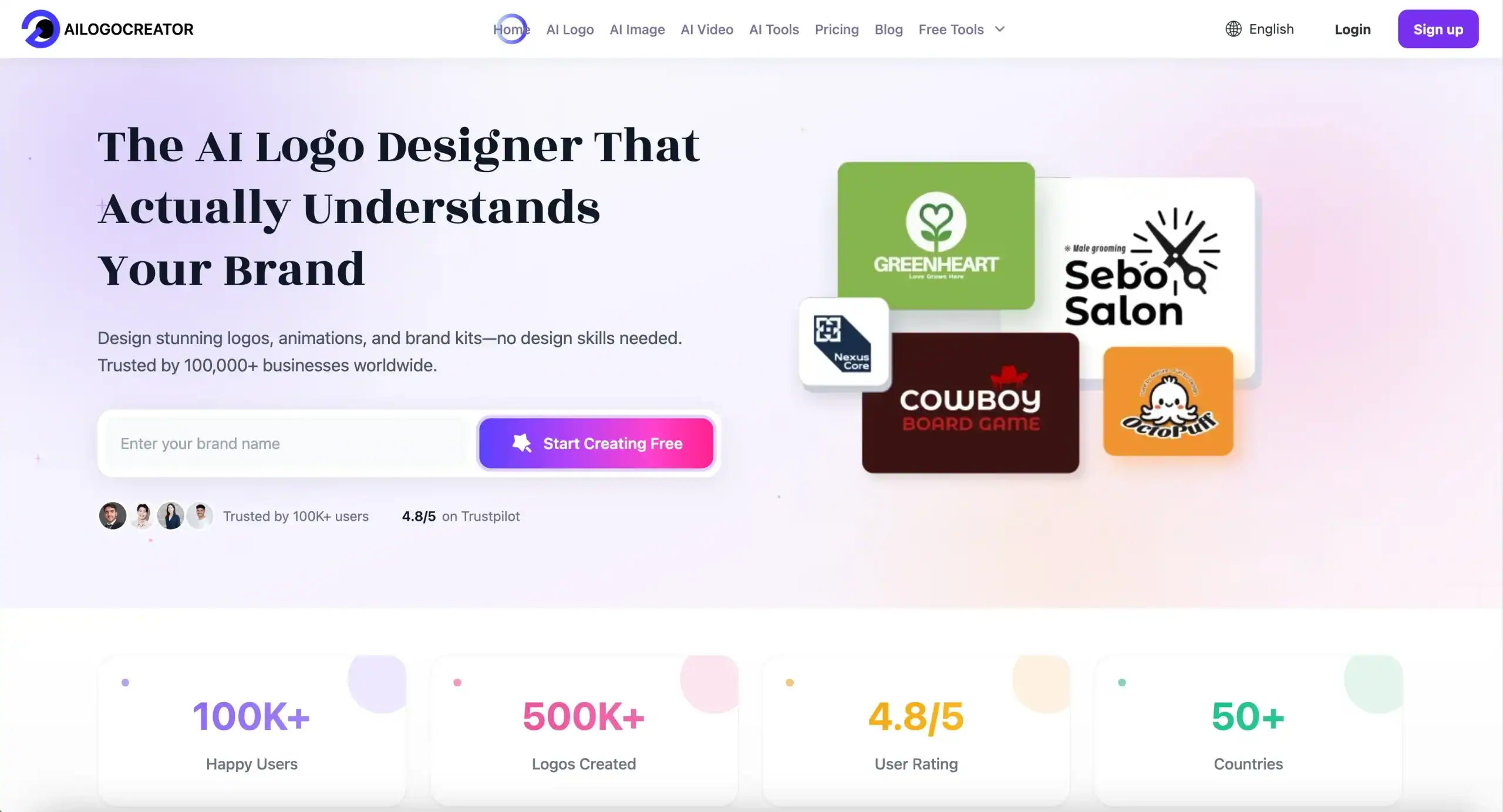
Creating a custom visual asset used to be prohibitively expensive, reserved for Fortune 500 companies. However, technology has shifted. Intelligent design platforms now allow for rapid iteration and generation of unique brand assets. For instance, tools like Ailogocreator demonstrate how advanced algorithms can assist in generating cohesive visual identities, including typographic elements, without weeks of manual labor. This shift allows smaller players to compete with major corporations on the distinctiveness of their visual language.
Strategic Implementation of Emotional Type Design
Understanding the theory is one thing; applying it requires discipline. I often advise against using too many “emotional” signals at once. If every word is animated, colored, and bolded, the viewer becomes overwhelmed.
Hierarchy is key. Use your expressive, custom typeface or kinetic typography for headlines and key messages—the “hooks.” Keep your body text legible and neutral. The contrast between the expressive header and the clean body text actually strengthens the emotional impact of the header.
Also, consider the context. A banking app should use font psychology to convey stability (perhaps a modern Serif or a sturdy Sans). A gaming brand can afford to be more experimental with variable fonts that react to user input. The goal is not just to look “cool” but to reduce the friction between the user and the message. When the typography matches the emotional intent of the text, the message is absorbed instantly.

Conclusion and Actionable Suggestions
Typography is not merely a vessel for words; it is the physical body of your brand’s voice. By combining the science of psychology with the technology of motion and variability, you can create a brand presence that feels human, responsive, and deeply memorable.
Here are five actionable steps to upgrade your typographic strategy:
- Audit your current fonts: Do they align with the emotions you want to convey? (e.g., Is your “innovative” tech brand using a dated, static font?)
- Experiment with motion: Add subtle kinetic typography to your primary call-to-action buttons or hero headlines to draw attention without annoyance.
- Adopt variable fonts: Replace multiple static font files with a single variable font to improve website load speeds and design flexibility.
- Define your typographic voice: Create a guideline that specifies not just which font to use, but how it should move and behave in different contexts.
- Test for emotional resonance: distinct designs often require feedback. A/B test different type styles on your landing pages to see which one drives better engagement.
FAQ
Q: What is the difference between brand typography and just choosing a font?
A: Choosing a font is a one-time aesthetic choice. Brand typography is a strategic system that defines how type is used across all touchpoints to build recognition, trust, and emotional connection over time.
Q: How does kinetic typography improve user experience (UX)?
A: It directs attention and provides feedback. Moving text can guide a user’s eye to important information or confirm an action (like a successful form submission), making the interface feel more intuitive and responsive.
Q: Are custom typefaces worth the investment for small businesses?
A: Yes, if distinctiveness is a priority. While costly in the past, modern design tools have lowered the barrier, allowing smaller brands to create unique visual identities that stand out from competitors using standard free fonts.
Q: Can font psychology really change customer behavior?
A: Absolutely. Studies indicate that appropriate font choices can increase trust and reading comprehension. If a font feels “hard” to read or emotionally mismatched (e.g., a comic font for a law firm), users are more likely to abandon the content.
Q: What are variable fonts?
A: Variable fonts are a font technology that allows a single file to behave like multiple fonts. They enable continuous variation of width, weight, and other attributes, offering designers infinite stylistic possibilities without performance penalties.
CommentsTake the first comment