
Understanding the visual language behind Tesla is not just about appreciating cars; it is a masterclass in how modern branding can shift entire industry standards. If you are a designer, entrepreneur, or automotive enthusiast, analyzing these aesthetic choices reveals how future-facing brands build trust without saying a word. We have moved beyond the era of ornamentation into a time where Tesla minimalist design and raw metallic finishes define the new premium standard.
- The Hidden Engineering: How the Tesla logo represents the physics of an induction motor.
- Material Honesty: Why the Cybertruck’s stainless steel exoskeleton redefines automotive beauty.
- The Death of Clutter: How interior minimalism forces a focus on software and experience.
- Strategic Branding: Applying these futuristic aesthetics to modern business identities.
The “T” is Not Just a Letter: Engineering Meets Art
Many consumers assume the stylized “T” is simply a futuristic font choice, but the reality is far more technical. According to design lore and confirmations from company leadership, the logo is actually a cross-section of an electric motor. The main body represents one of the poles of the rotor, while the top line symbolizes a section of the stator.
This creates a powerful subliminal message. While traditional luxury car logos often rely on heraldry, shields, or abstract wings to convey heritage, Tesla’s logo conveys function. It bridges the gap between hard engineering and visual art. For an EV brand identity, this is crucial. It tells the user that the core value of the product lies in its propulsion technology, not its history.
When I look at this design approach, I see a lesson for all modern brands: your symbol should not just identify who you are, but explain how you work. The sleekness of the logo mirrors the efficiency of the engine itself, creating a perfect alignment between the product’s reality and its visual representation.
Cybertruck and the Brutalism of Stainless Steel
The introduction of the Cybertruck brought a shockwave to futuristic automotive aesthetics that we haven’t seen since the DeLorean. By utilizing an ultra-hard 30X cold-rolled stainless steel exoskeleton, the design rejects the traditional automotive process of stamping curves and applying paint.
The Psychology of Raw Metal
The decision to use bare metal is not merely a cost-saving or durability measure; it is a psychological play. Metallic vehicle finishes, particularly those that look raw and unpolished, convey a sense of impenetrability and permanence.
- Durability: The material implies that the object is a tool, not a delicate accessory.
- Coldness: In color psychology, silver and steel tones are associated with high-tech precision and intellect, distancing the vehicle from the “warmth” of internal combustion nostalgia.
- Honesty: There is no paint to hide imperfections. The material you see is the material that protects you.
This “material honesty” challenges competitors who wrap plastic in chrome to fake value. It forces the market to reconsider what “premium” looks like. It suggests that in the EV era, luxury is defined by resilience and engineering purity rather than leather stitching and gloss coats.
Minimalism: The “Clean Sheet” Interior Revolution
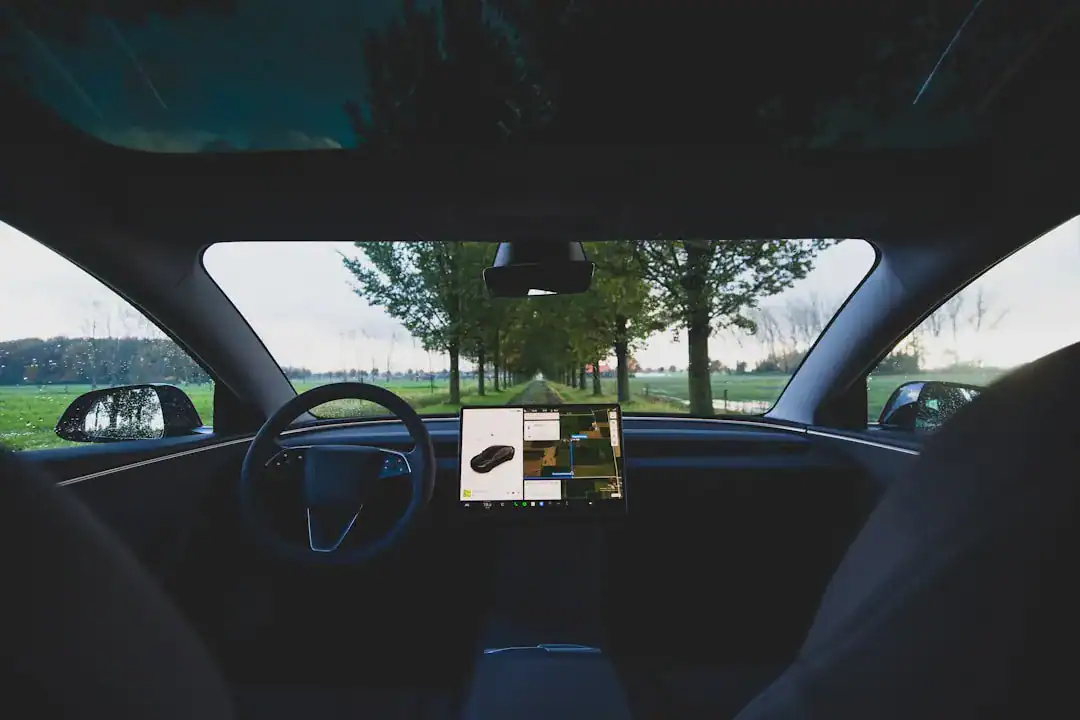
If the exterior is about armor, the interior is about the absence of noise. Tesla minimalist design has effectively deleted the instrument cluster, vents, and physical buttons that defined automotive interiors for a century.
Industry analysis indicates that this “clean sheet” approach was initially polarizing but has now become the benchmark. By centralizing controls onto a single screen, the design forces the driver to engage with the car as a software platform rather than a mechanical machine. This is a high-risk, high-reward strategy. It alienates traditionalists but captivates a generation raised on smartphones.
The aesthetic result is an environment that feels spacious and calm. Without the visual clutter of dials and knobs, the focus shifts entirely to the road and the connectivity features. This reductionism suggests that the car is smart enough to handle the complexity, so the human doesn’t have to.
Metallic Textures as the New “Green” Identity
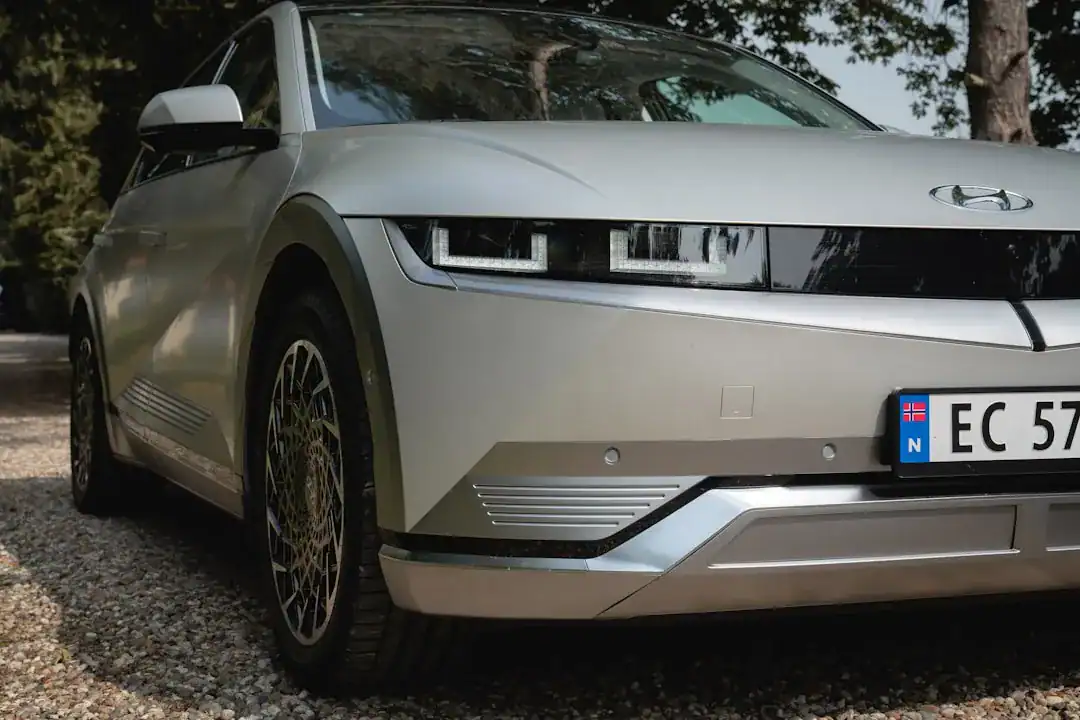
In the early 2000s, “green” energy branding was dominated by leaf motifs and the color green. Today, the EV brand identity is dominated by metallic textures—silver, matte grey, and chrome.
This shift is significant. It reframes electric vehicles from being “an environmental compromise” to being “superior technology.” Metallic finishes mimic the look of circuitry, conductors, and aerospace materials. When a vehicle looks like a solid block of aluminum or steel, it visually communicates efficiency and conductivity.
I believe this is why metallic textures have become synonymous with high-performance EVs. They signal that the vehicle is part of a digital ecosystem. The shimmer of metal suggests speed and electricity, whereas flat colors can feel static. For new brands entering the space, mastering these gradients and textures is essential to being perceived as a serious technological contender.
Applying Futuristic Aesthetics to Modern Branding
You do not need to manufacture cars to apply these principles. The success of Tesla’s visual language proves that consumers are hungry for simplicity and intelligence in design. Whether you are launching a tech startup or a consultancy, stripping away unnecessary elements and focusing on a strong, singular symbol can elevate your perceived value.
The challenge lies in execution. A minimalist logo can easily look unfinished if the proportions are wrong. This is where modern design tools bridge the gap. Platforms like Ailogocreator allow users to generate professional-grade logos that utilize these exact principles of reduction and metallic styling. By using AI to balance weight and symmetry, small businesses can achieve that “tech giant” look without the agency price tag. It represents the same kind of efficiency-first thinking that drives the EV sector.
FAQ
What is the hidden meaning behind the Tesla logo?
The logo is a stylized cross-section of an electric induction motor. The main body represents a rotor pole, and the top line represents a section of the stator, symbolizing the magnetic fields that drive the engine.
Why does the Cybertruck use stainless steel?
Stainless steel provides extreme durability and corrosion resistance, eliminating the need for paint. Visually, it creates a brutalist, futuristic aesthetic that signals strength and breaks away from traditional automotive manufacturing constraints.
How does minimalism affect EV range and performance?
While interior minimalism is largely aesthetic, the exterior minimalist design focuses on aerodynamics. Smoother lines and fewer protruding parts (like door handles) reduce drag, which directly increases the range and efficiency of the battery.
Why are metallic colors popular for electric vehicles?
Metallic colors like silver, grey, and copper evoke associations with technology, circuitry, and aerospace engineering. They position the vehicle as a high-tech machine rather than just a luxury carriage.
Conclusion and Actionable Suggestions
The dominance of Tesla’s design language proves that the market rewards boldness and reduction. To apply this to your own projects or brand identity:
- Embrace Material Honesty: Don’t use textures that fake other materials. If your brand is digital, let it look digital. If it is industrial, let it look raw.
- Simplify Your Symbol: Ensure your logo has a “functional” logic. Does it explain what you do, or is it just decoration?
- Reduce Visual Noise: In your product or website, remove every element that does not serve a direct purpose. Space creates value.
- Use Metallics Strategically: Incorporate silver or steel tones to convey precision, speed, and high-tech capability in your visual assets.
CommentsTake the first comment