
By aligning visual identity with deep-rooted national symbolism, brands can bypass years of trust-building to establish immediate authority in the consumer’s mind. If you are a brand strategist or a fintech founder, understanding how Bank of America leverages logo design psychology is critical for positioning your own entity as a pillar of stability. This analysis breaks down the financial services branding mechanisms behind the iconic “Flagscape” and how it turns American flag symbolism into a corporate asset.
- Patriotism as a psychological anchor: How national symbols reduce cognitive friction for customers.
- The “Inevitability” Strategy: Moving brand identity from “friendly” to “institutional infrastructure.”
- Color Theory in Finance: Why the specific shade of blue dictates the level of perceived security.
- Digital Adaptation: The logic behind the 2019 logo refinement for mobile interfaces.
The “Flagscape” Strategy: Semiotics of the American Dream
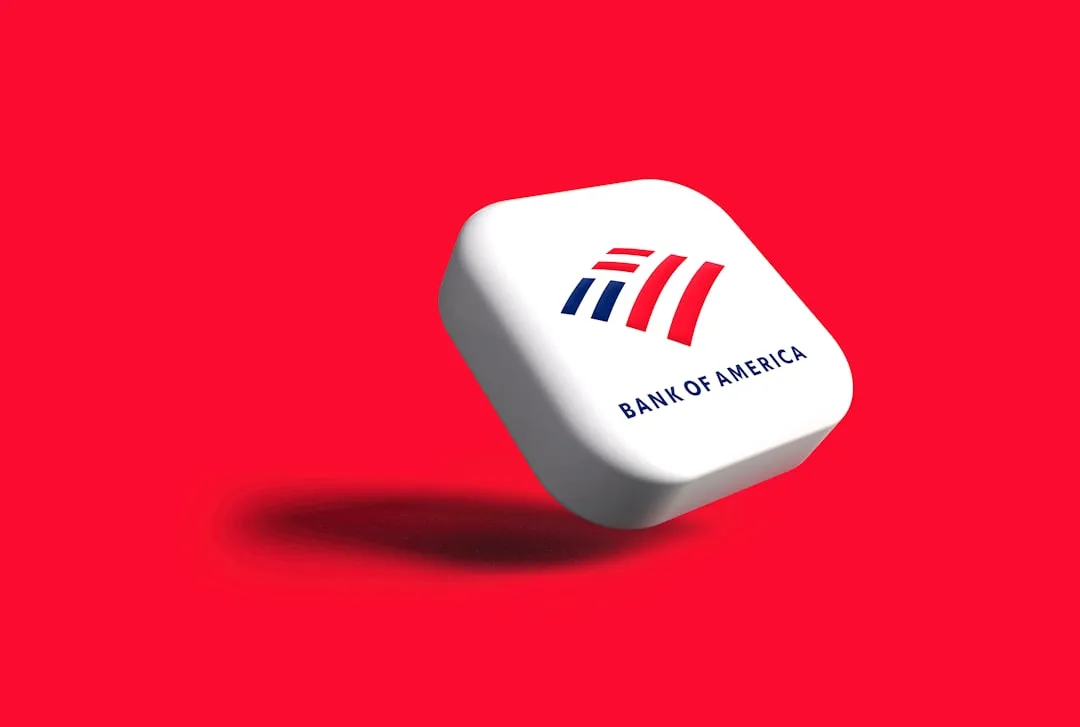
When I look at the Bank of America logo, I don’t just see a bank; I see a deliberate attempt to weave a corporation into the fabric of a nation. The “Flagscape” icon, introduced in 1998 and refined later, is a masterclass in corporate brand identity. It is not a literal flag, nor is it a simple abstract shape. It operates on two levels: it represents the American flag, evoking patriotism, and it resembles a woven field, symbolizing agricultural roots and economic growth.
According to design experts, this duality is intentional. By using an abstract representation of the flag, the bank claims a piece of the “American identity” without violating the flag code. In financial services branding, this is a power move. It suggests that the bank’s stability is tied directly to the stability of the country itself. The logo communicates that the bank is not just a service provider but a foundational element of the economy.
From “Serious” to “Inevitable”: The Evolution of Authority
Market analysis indicates that Bank of America’s design history reflects a shift from wanting to appear “serious” to appearing “inevitable.” In the early 20th century, their identity was text-heavy and formal, relying on the weight of the name itself. However, as they expanded, the need for a symbol that could transcend language became apparent.
I believe the transition to the “Flagscape” marked a turning point where the brand stopped trying to compete with other banks and started positioning itself as financial infrastructure. The logic here is profound: you don’t question the water company or the electric grid; they just are. By adopting a logo that feels like a government seal or a national banner, Bank of America utilizes building brand trust by association. The design doesn’t ask for your business; it assumes it.
Color Psychology: Why the 2019 Darker Blue Matters
In 2019, the bank refreshed its logo, and the most significant change was the color palette. They moved from a brighter, standard blue to a deeper, darker navy. To the untrained eye, this might seem trivial, but in logo design psychology, it is a calculated decision.
- Bright Blue: Often associated with technology, startups, and communication (think Twitter or Skype). It signals “new” and “friendly.”
- Dark Navy: Signals authority, heritage, and deep security.
By darkening the blue, the brand distanced itself from the volatile “tech” sector and doubled down on “institutional security.” Industry reports suggest that this shift was also necessary for digital accessibility. The darker blue provides better contrast on white mobile screens, ensuring the brand remains legible and commanding even on a 5-inch display. The red stripes remain dynamic, representing action and passion, but they are contained within the stability of the blue.

Typography and the “All-Caps” Statement
The typographic change in the recent rebranding is equally telling. The switch to an all-caps sans-serif typeface (with very subtle serifs) improves readability across digital platforms. Lowercase letters often convey approachability and friendliness, which was the trend in the early 2000s (e.g., the “friendly” web 2.0 era).
However, I argue that money is serious business. The return to uppercase letters in the wordmark projects strength. The letters are spaced widely (kerning), which allows the logo to breathe. This “air” around the letters creates a sense of luxury and calm. Crowded letters feel urgent; spaced letters feel established. This subtle manipulation of space reinforces the corporate brand identity of a bank that is too big to fail.
Scaling Trust for Modern Brands
The lesson here for emerging brands is that you don’t need a hundred-year history to project stability, but you do need a design that understands its audience’s psychological triggers. Bank of America uses familiarity (the flag) to bypass skepticism.
For modern businesses, achieving this level of professional visual identity is no longer restricted to those with million-dollar agency budgets. Advanced tools like Ailogocreator are becoming the industry benchmark for generating logos that align with these psychological principles efficiently. Whether you are a startup or an established firm, the goal is the same: consistency creates trust.
The Logic of the “Field” Metaphor
There is another layer to the logo that often goes unnoticed. The woven texture of the icon resembles a plowed farm field. This is a nod to the bank’s origins (Bank of Italy) serving working-class immigrants and farmers in California.
This “field” metaphor is brilliant because it grounds the abstract financial world in something tangible and earth-bound. It implies: “We help you grow.” In building brand trust, tangible metaphors are powerful. They take complex concepts (compound interest, investment portfolios) and reduce them to a simple, universal image: planting seeds and watching them grow.

FAQ
Q: What is the hidden meaning behind the Bank of America logo?
A: The logo, known as the “Flagscape,” represents both the American flag and a plowed field. It symbolizes patriotism, national stability, and the cultivation of economic growth.
Q: Why did Bank of America change its logo in 2019?
A: The 2019 update focused on modernization for digital environments. The darker blue improves contrast on screens, and the all-caps font ensures better legibility on mobile devices while projecting a more authoritative image.
Q: How does the logo use color psychology?
A: The deep blue evokes feelings of trust, security, and intelligence, while the red adds energy and passion. The combination leverages the patriotic association with the US flag to build instant familiarity.
Q: Why is the logo considered “inevitable” in design terms?
A: Branding experts describe the design as “inevitable” because it mimics institutional or governmental imagery. This positions the bank as a permanent, essential part of the country’s infrastructure rather than just a commercial business.
Q: Is the Bank of America logo minimalist?
A: The current iteration leans towards minimalism by removing gradients and simplifying the stripes. This “flat design” approach ensures the logo scales perfectly from a favicon on a browser tab to a giant sign on a skyscraper.
Conclusion and Actionable Suggestions
Bank of America’s visual identity succeeds not because it is flashy, but because it is psychologically sound. It uses the “Flagscape” to borrow authority from the nation itself, creating a perception of permanence. For business leaders and designers, the takeaways are clear:
- Leverage Familiarity: Use symbols or colors that your audience already trusts (like national colors or universal shapes) to reduce the cognitive load.
- Prioritize Legibility: Ensure your logo works as well on a smartphone notification bar as it does on a billboard. The 2019 BofA update proves that digital-first is the only way forward.
- Own Your Category: If you are in finance, look stable (dark colors, strong fonts). If you are in tech, look agile. Don’t confuse the consumer by crossing these wires unnecessarily.
- Simplify for Scale: Complex logos die on small screens. Flatten your design and increase contrast to ensure your brand remains recognizable in every context.
- Consistency is Key: Trust is built through repetition. Once you establish a strong visual identity, stick to it to build that “inevitable” presence.
CommentsTake the first comment