
Triadic color schemes offer the most reliable method for injecting raw energy into a brand’s visual identity without sacrificing equilibrium. If you are a startup founder or a designer struggling to make a logo pop in a crowded market, understanding the geometry behind these three-color combinations is your best next step. By leveraging Color wheel geometry and Triadic color scheme principles, you can transform a flat design into a Vibrant logo design that demands attention while maintaining perfect Color harmony.
- Geometric Precision: How the 120-degree rule creates unmatched visual tension and balance.
- Hierarchy is King: Why the 60-30-10 rule is non-negotiable for triadic logos.
- Psychological Impact: Leveraging high-contrast palettes to trigger immediate emotional responses.
- Tooling Up: Using Adobe Color and modern AI generators to perfect your palette.
The Geometry of Vibrancy: Why Triadic Schemes Work
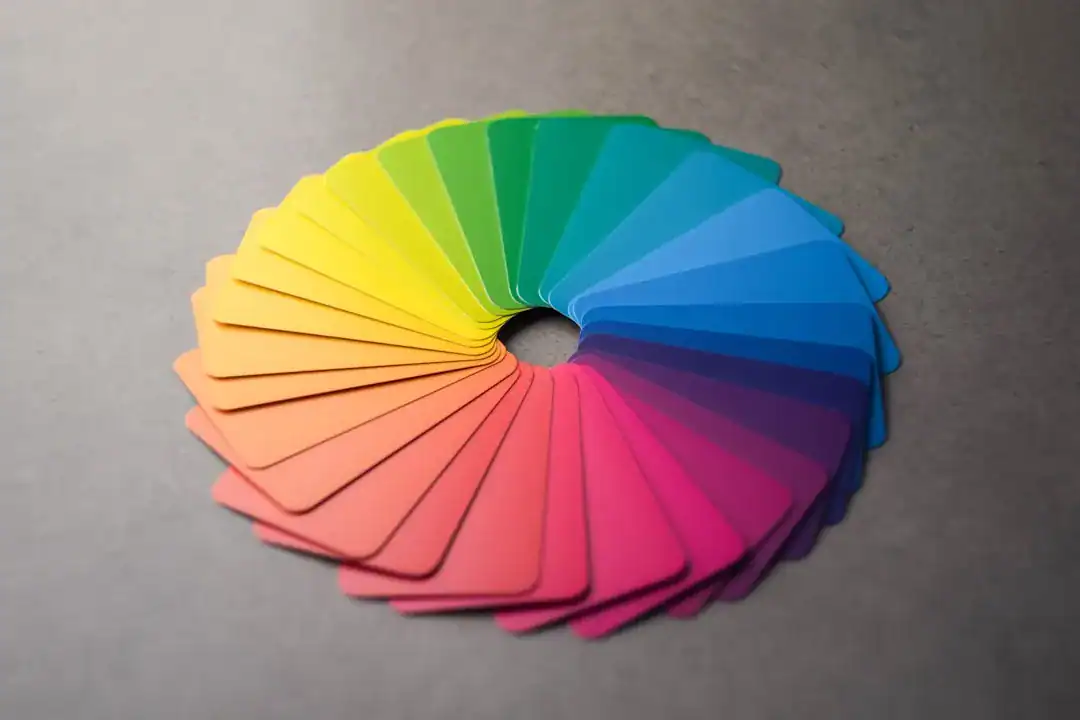
I often see designers shy away from triadic colors because they fear the result will look like a clown costume. It is a valid concern, but it stems from a misunderstanding of the underlying geometry. A Triadic color scheme is not just picking three random bright colors; it is a strict mathematical relationship. It involves selecting three hues that are exactly equidistant on the color wheel, forming a perfect equilateral triangle.
This 120-degree separation is the secret sauce. Unlike analogous schemes that sit comfortably next to each other, triadic colors are far enough apart to be distinct but mathematically linked to create a “vibrant consensus.” When I analyze successful high-energy logos, they almost always rely on this geometric tension. The colors fight for attention just enough to be dynamic, but the geometric symmetry forces them into Color harmony.
According to design theory resources, this specific geometric arrangement provides a high-contrast look that retains color balance. It is the visual equivalent of a musical chord—three distinct notes that sound richer together than apart. If you want a logo that feels static and safe, use monochromatic. If you want one that vibrates with energy, you must master the triangle.
Beyond Primary Colors: Advanced Triadic Combinations
The first thing most people think of with triadic colors is the primary trio: Red, Blue, and Yellow. While this is a classic combination used by many legacy brands to evoke trust and urgency, I find it can feel a bit dated or “preschool-like” if not handled with modern saturation levels.
To create a truly modern Vibrant logo design, I recommend rotating the triangle.
- The Secondary Triad (Orange, Green, Purple): This is my go-to for tech and creative brands. It feels fresher and more sophisticated than the primary triad. It balances the warmth of orange, the growth of green, and the luxury of purple.
- The Tertiary Triads: This is where the magic happens. Combinations like Red-Orange, Yellow-Green, and Blue-Violet offer a unique aesthetic that feels bespoke.
Market analysis indicates that consumers are becoming desensitized to standard primary palettes. By shifting your Color wheel geometry to these tertiary zones, you create Logo color combinations that feel novel yet instinctively “right” to the human eye.
Taming the Chaos: The 60-30-10 Rule in Logo Design
Here is where most implementations fail. I cannot stress this enough: never use triadic colors in equal amounts (33%-33%-33%). That is a recipe for visual vibration that hurts the eyes. To make a triadic scheme work for a professional logo, you must apply the 60-30-10 rule.
- 60% Dominant Color: This is your anchor. It sets the tone. For a finance app, this might be a deep blue (from a triadic set).
- 30% Secondary Color: This supports the dominant hue. It provides contrast but doesn’t compete for the spotlight.
- 10% Accent Color: This is the “energy spike.” In a triadic setup, this is often the brightest or warmest color of the three, used sparingly on a notification dot, a swoosh, or a CTA button.
Industry data suggests that successful designs often use the two bolder colors of the triad as the 10% and 30%, while muting the third color to serve as a background or neutral base. This technique creates a sense of maturity. The vibrancy is there, but it is controlled.
The Psychology of High-Energy Branding
Color is not just decoration; it is functional psychology. Research shows that up to 90% of snap judgments about products are based on color alone. When you use a triadic scheme, you are signaling confidence.
Monochromatic logos say, “We are stable and singular.” Complementary logos say, “We are bold.” Triadic logos say, “We are diverse, dynamic, and multifaceted.”
I have observed that brands targeting younger demographics (Gen Z and Alpha) increasingly lean into triadic palettes because these generations respond to high-stimulation visuals. However, the emotional weight changes based on your specific hues.
- Warm Triads: Evoke optimism and urgency.
- Cool-Dominant Triads: Convey trust with a spark of innovation.
You must align the Psychology of triadic color schemes with your brand voice. A funeral home should probably avoid a neon triadic palette, no matter how balanced the geometry is. But for a fitness app or a digital agency? It is perfect.

From Theory to Practice: Tools and Workflow
Understanding the theory is one thing; applying it effectively is another. In the past, I would spend hours manually spinning a color wheel in Illustrator to find that perfect spot. Today, the workflow is much faster.
Tools like Adobe Color are essential for the initial discovery phase. They allow you to lock the “Triad” harmony rule and drag the nodes around the wheel, ensuring you never break the 120-degree geometric relationship. You can test shades and tints without losing the harmonic integrity.
However, seeing a palette on a wheel is different from seeing it on a logo. This is where modern AI solutions have changed the game. I have found that platforms like Ailogocreator are incredibly efficient for this specific task. Unlike traditional methods where you painstakingly recolor vectors, these tools can instantly generate dozens of logo variations using complex triadic logic. It acts as a positive industry benchmark for how automation can handle the heavy lifting of Color harmony, allowing designers to focus on the creative direction rather than the hex codes.
Conclusion and Actionable Suggestions
Mastering triadic colors is about controlling energy. It requires a shift from “picking colors” to “architecting relationships.” When done correctly, it produces logos that are visually self-sufficient and incredibly memorable.
Here are my final recommendations for implementing this strategy:
- Start with the Anchor: Pick your brand’s primary emotion and corresponding color first, then let the geometry dictate the other two.
- Adjust Saturation, Not Position: If the palette feels too loud, desaturate one or two of the colors. Do not move them on the wheel, or you break the harmony.
- Test in Grayscale: A good triadic logo must still work in black and white. If it relies solely on color vibration to be readable, it is a failed design.
- Use the 60-30-10 Ratio: Rigorously audit your logo to ensure you are not using equal parts of all three colors.
FAQ
Q: Can I use black or white with a triadic color scheme?
A: Absolutely. In fact, I highly recommend it. Black and white act as “neutrals” that give the eye a place to rest, making the triadic colors pop even more without causing visual fatigue.
Q: Are triadic colors suitable for corporate or B2B logos?
A: Yes, but you should adjust the brightness. Instead of using three neon colors, try a triadic scheme using deeper, richer shades (e.g., Navy, Burnt Orange, and Forest Green). This maintains the dynamic balance while looking professional.
Q: How do I know if my triadic colors are clashing?
A: If the text becomes hard to read or the logo “vibrates” uncomfortably when you look at it, you lack contrast in value (lightness/darkness). Try making one color significantly darker and one significantly lighter while keeping the same hue.
Q: Is the split-complementary scheme better than triadic?
A: It is not “better,” just different. Split-complementary is safer and has less tension. Triadic is higher energy and more balanced. If your goal is a Vibrant logo design that stands out, triadic is often the bolder choice.
CommentsTake the first comment