
Mastering visual balance in branding allows you to communicate stability and innovation simultaneously without saying a word. If you are a brand strategist or a UI/UX designer, understanding how global giants manage this equilibrium is essential for your own work. I often look at the evolution of the Samsung visual identity—specifically the famous blue ellipse—to understand how a static logo can project a dynamic global brand strategy and deep philosophical consistency.
- The tilted ellipse is not just a frame; it represents the universe and continuous motion.
- Text breaking the outer boundary symbolizes the company’s drive to innovate beyond limits.
- Visual balance is achieved through specific spacing refinements and color psychology.
- The design philosophy “Inspired by Humans, Creating the Future” dictates every curve.
- Consistency across hardware and software creates a unified brand language.
The Geometry of Ambition: Why the Ellipse Tilts
When I analyze the 1993 rebranding that introduced the blue ellipse, it becomes clear this was not a random aesthetic choice. The shape is rotated to an angle of about 10 degrees from the horizontal axis. This subtle tilt creates a sense of tension and potential energy. Unlike a perfect circle, which can feel static or closed, the ellipse suggests movement and orbital dynamics.
Industry analysis indicates that this shape symbolizes the universe and the world stage. It positions the brand not just as a participant in the market, but as a central body around which technology orbits. The visual balance here is tricky; tilt it too much, and it looks unstable. Samsung found the sweet spot where the logo looks like it is moving forward, aligning perfectly with a global brand strategy focused on advancement.
- Dynamic Angle: Represents forward motion and progress.
- Universal Shape: Symbolizes global reach and inclusivity.
- Containment vs. Expansion: The border holds the name but allows it to push out.
Industry Insight: According to design historians, the 1993 shift was a deliberate move to shed a localized image and project a “transnational” identity, using the ellipse to signify a world-encompassing vision.
Actionable Suggestion: When designing a logo meant to convey speed or progress, avoid perfect symmetry. Introduce a slight axis tilt to create visual momentum.
Breaking the Border: The “S” and “G” Phenomenon
One detail that often escapes casual observation is how the letters “S” and “G” interact with the ellipse. They breach the perimeter. In my experience reviewing corporate identities, this is a risky move that often leads to visual clutter, yet here it works brilliantly to communicate the Samsung design philosophy.
The letters spilling out of the oval signify an open-minded attitude and a refusal to be constrained by traditional boundaries. It visually narrates the company’s mission to “innovate for all” and “create possibilities.” If the text were fully contained, the brand might appear defensive or insular. By breaking the line, the visual identity suggests a company that is constantly expanding its influence outward.
Key Design Elements:
- Open Ends: The first and last letters connect the interior to the exterior.
- Typography: A custom typeface designed to be legible even when interacting with the border.
- Negative Space: The blue background is balanced by the white text, creating high contrast.
Expert Note: Branding experts highlight that this “break-out” technique creates a psychological impression of a brand that is larger than its defining category.
Actionable Suggestion: If you want your brand to appear innovative, design your visual elements so they interact with or disrupt their container, rather than sitting passively inside it.
The Psychology of Samsung Blue and Visual Stability
Color is the anchor of visual balance. The specific shade of blue used (often referred to as Samsung Blue) helps ground the dynamic shape of the ellipse. Blue universally conveys trust, reliability, and technical precision. Without this calming color, the tilted, broken-border design might feel too chaotic or aggressive.
I find that the interplay between the “unstable” shape and the “stable” color creates a unique harmony. This aligns with the “Newfound Equilibrium” concept showcased at recent design exhibitions like Milan Design Week. The brand manages to look exciting (shape) yet dependable (color). For modern creators using tools like Ailogocreator, achieving this level of psychological balance—where color offsets the geometry—is the gold standard for automated yet professional design generation.
- Color Code: Pantone 286C (historical reference).
- Emotional Impact: Reliability, intelligence, and serenity.
- Strategic Function: Balances the “aggressive” innovation of the shape.
Market Data: Studies on brand color perception show that blue logos are 33% more likely to be associated with enterprise-level security and dependability compared to red or yellow logos.
Actionable Suggestion: Pair high-energy shapes (triangles, tilted ovals) with low-energy, high-trust colors (blues, greens) to prevent your visual identity from overwhelming the viewer.
From Logo to Hardware: The Ripple Effect of Curves
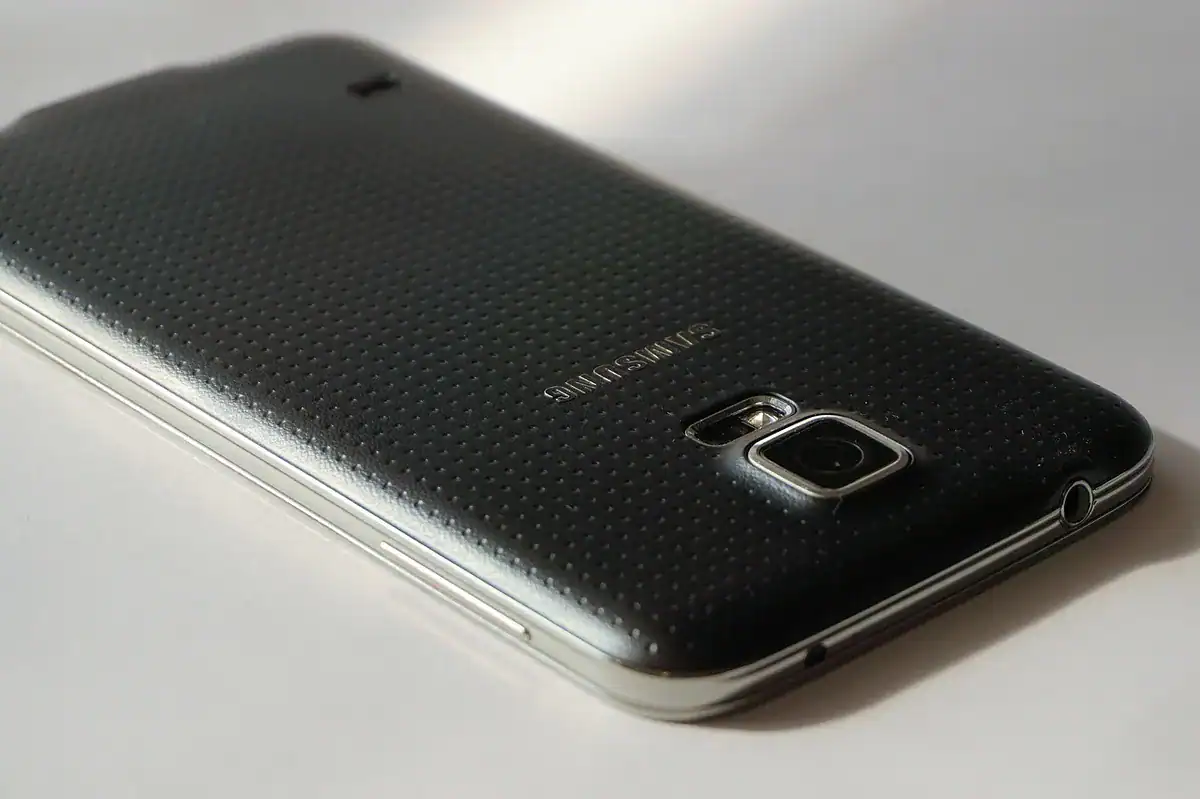
The visual balance established in the logo does not stop at marketing materials; it bleeds into the product design itself. I notice this consistently in the curvature of their hardware. The rounded corners of their laptops and smartphones often mimic the curvature of the ellipse.
This is what creates “brand consistency” without slapping a logo on every surface. The “seamless screen for visual stability” mentioned in design stories for the Galaxy Book series reflects the same desire for clean, uninterrupted lines found in the visual identity. The hardware feels like a physical manifestation of the logo’s geometry—smooth, continuous, and human-centric.
Hardware Design Parallels:
- Rounded Corners: Mimic the ellipse’s arc.
- Bezel-less Displays: Reflect the “breaking boundaries” concept.
- Unified Glass Planes: Echo the singular, cohesive universe of the logo.
Design Philosophy: The “Inspired by Humans” ethos drives the decision to use soft, elliptical curves in hardware, as these are more comfortable to hold than sharp, industrial angles.
Actionable Suggestion: Audit your physical or digital products. Do the corner radii and button shapes reflect the geometry of your primary logo? If not, adjust them to build subconscious brand recognition.
Modern Refinements and the Shift to Lettermarks
In 2005, the brand refined its visual identity to improve visibility. While the ellipse remains the corporate symbol, the lettermark (the text alone) is often used in marketing, especially in the US. This might seem like a contradiction, but I see it as an evolution of visual balance.
The lettermark relies on the “visual harmony through even distribution of letters.” The spacing and height were adjusted so that the text stands strong even without the ellipse. This shows confidence. The brand no longer needs the symbol to be recognized; the name itself carries the weight of the global vision. This flexibility allows the brand to maintain consistency across diverse platforms, from tiny smartwatch screens to massive stadium billboards.
- 2005 Refinement: improved spacing for digital readability.
- Contextual Usage: Ellipse for corporate, lettermark for product.
- Future Vision: “Essential, Innovative, Harmonious” (2030 identity goals).
Visual Identity Guidelines: Recent guidelines suggest keeping a protected space around the logo equal to twice the height of the wordmark to ensure it remains the focal point.
Actionable Suggestion: Design your logo to be modular. Ensure the text element is strong enough to stand alone when the graphic icon is removed for space-constrained applications.
FAQ
Why is the Samsung logo tilted?
The ellipse is rotated approximately 10 degrees to symbolize dynamism, innovation, and the universe. A tilted axis suggests movement and kinetic energy, preventing the brand from appearing static or stagnant.
What does the text breaking out of the ellipse mean?
The letters “S” and “G” touching the edges represent the brand’s willingness to break boundaries and push beyond limitations. It visually communicates a philosophy of open innovation and connection to the outside world.
Why does Samsung sometimes use the logo without the ellipse?
In many markets, particularly for consumer products in North America, the lettermark alone is preferred for its simplicity and legibility. The ellipse is reserved for corporate branding to signify the parent company’s global continuity.
How does the blue color contribute to the global strategy?
The specific shade of blue communicates reliability and corporate responsibility. It balances the aggressive, forward-moving shape of the ellipse with a sense of stability, which is crucial for building trust in a global market.
Conclusion and Actionable Suggestions
Samsung’s visual identity is a masterclass in using simple geometry to project complex corporate values. The ellipse is not just a ring; it is a declaration of global ambition and a commitment to continuous progress. To apply these principles to your own brand strategy:
- Inject Dynamism: Don’t settle for static shapes. Use angles, tilts, or asymmetry to imply movement and growth in your visual assets.
- Disrupt the Frame: Allow elements of your design to break their containers. This signals innovation and a lack of arbitrary boundaries.
- Balance with Color: If your shape is aggressive or unusual, ground it with a color that conveys stability (like deep blue) to maintain consumer trust.
- Enforce Consistency: Ensure the curves and lines of your logo are reflected in your product design, website buttons, and packaging.
- Plan for Modularity: Create a visual identity where the symbol and the text can function independently without losing brand recognition.
CommentsTake the first comment