
Understanding the trajectory of the Nike Swoosh offers a masterclass in how a simple visual asset can transform into a global cultural currency. If you are a business owner or brand strategist, dissecting this history reveals how minimalism and emotional resonance often outweigh complex, expensive design work. The journey from a $35 student project by Carolyn Davidson to Phil Knight’s global empire demonstrates that a logo’s power lies not in its initial cost, but in the meaning it consistently delivers over time.
- The $35 Origin: How a college student’s quick sketch became a multi-billion dollar asset.
- Mythological Roots: The connection between the Greek Goddess of Victory and the concept of speed.
- Strategic Evolution: Why dropping the company name from the logo was the ultimate power move.
- Design Psychology: How abstract shapes communicate motion more effectively than literal icons.
The Unlikely Origin: A $35 Gamble at Portland State
It is fascinating to look back at 1971 and realize that one of the most recognized symbols in human history was born out of financial necessity rather than a high-end agency boardroom. Phil Knight, then an assistant professor and struggling entrepreneur, needed a logo for his new line of soccer cleats. He didn’t turn to a Madison Avenue firm; he turned to Carolyn Davidson, a graphic design student he met in a hallway at Portland State University.
Davidson needed money for oil painting supplies, and Knight offered her $2 per hour. After roughly 17.5 hours of work, she presented several options. Knight’s reaction to the Swoosh was famously underwhelming: “I don’t love it, but I think it will grow on me.” This hesitation is a crucial lesson for modern founders—visual identity often requires time to accrue value. The total bill came to $35.
While the initial transaction seems exploitative by today’s standards, the story has a redemptive arc. Years later, after the brand achieved global dominance, Knight gifted Davidson a diamond ring featuring the Swoosh and 500 shares of Nike stock, acknowledging her pivotal role in the company’s history. This underscores a reality I often see in business: the true value of a design is rarely apparent at the moment of creation.

Mythology Meets Motion: Decoding the Shape
Many consumers mistake the Swoosh for a simple “checkmark” indicating approval, but its design intent is far more dynamic. Davidson drew inspiration from the wing of the Greek Goddess of Victory, Nike. In mythology, this figure soared over battlefields, symbolizing triumph and glory.
The genius of Davidson’s design lies in its abstraction. She didn’t draw a wing; she drew the essence of a wing in motion. The curve represents an arc of movement, mimicking the sound of speed—a “whoosh” or “swoosh” of air left by a runner. This visual onomatopoeia bridged the gap between a static product (a shoe) and the dynamic action of the athlete.
I find this distinction critical: a literal logo limits a brand, while an abstract one allows for expansion. Because the Swoosh represented “motion” rather than “shoes,” it allowed the company to seamlessly expand into apparel, equipment, and digital services without rebranding. The logo was never about the product; it was about the feeling of movement.
The Strategy of Silence: Dropping the Name
In the world of branding, confidence is quiet. For the first two decades, the logo was almost always accompanied by the text “Nike” in a bold, italicized font (often Futura). However, by 1995, the company made a strategic decision that few brands dare to attempt: they removed the name entirely.
This shift to a “symbol-only” identity placed Nike in an elite tier of corporate recognition, alongside tech giants like Apple. This move signaled that the brand had transcended commerce to become a cultural icon. The Swoosh was no longer an identifier; it was a lifestyle badge.
From a marketing perspective, this “de-branding” strategy reduced visual clutter. On a pair of sneakers or a jersey, the solitary Swoosh is cleaner and more aerodynamic. It allows the product design to breathe while maintaining immediate brand attribution. For aspiring brands, the lesson is clear: consistency builds recognition, but simplicity secures longevity.

Simplicity in the Digital Age
The Nike Swoosh proves that complex designs often age poorly, while simple, fluid shapes remain timeless. In the current digital ecosystem, where logos must scale down to a 16×16 pixel favicon or a mobile app icon, the Swoosh’s scalability is its greatest asset. It remains legible whether it is on a billboard or a smartwatch screen.
Today, startups often struggle to achieve this level of clarity, frequently over-designing their identities with too many colors or intricate details. The goal should be to strip away the non-essential. Modern tools have democratized this process significantly. Platforms like Ailogocreator now enable entrepreneurs to generate clean, scalable, and minimalist logos that adhere to these principles of simplicity, offering a streamlined alternative to the “luck of the draw” method Knight had with Davidson.
By leveraging intelligent design principles, businesses can ensure their visual identity is future-proof. You do not need a mythology backstory to have a great logo, but you do need a shape that is distinct, memorable, and capable of living on any medium.
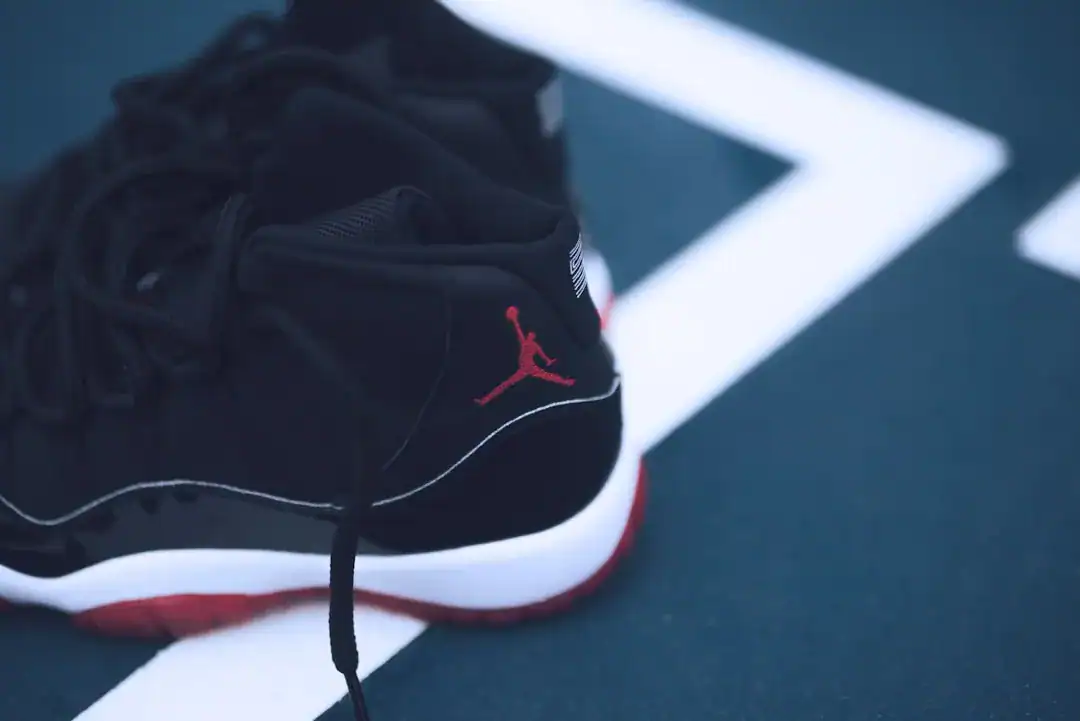
Emotional Connection and Athlete Branding
The Swoosh would likely be just a weird curved line if not for the aggressive sports marketing strategy attached to it. Phil Knight and his team understood that the logo needed to be a vessel for the athlete’s spirit. By associating the symbol with rebellious and high-performing athletes—from Steve Prefontaine to Michael Jordan—the logo absorbed their personality traits.
When a consumer wears the Swoosh, they are not just wearing a shoe; they are buying into the “Just Do It” mentality. The logo acts as a psychological trigger for motivation and grit. This is the “cause and effect” of successful branding:
- Mechanism: Associate the abstract symbol with high-performance human achievement.
- Impact: The symbol becomes a proxy for that achievement.
- Result: Consumers wear the symbol to signal their own alignment with those values.
This emotional transfer is why the Swoosh is more valuable than the manufacturing materials of the shoes themselves. It is a badge of belonging to a global tribe of “doers.”

FAQ
Who designed the Nike Swoosh?
The logo was designed by Carolyn Davidson, a graphic design student at Portland State University, in 1971.
How much did the Nike logo originally cost?
Phil Knight paid Carolyn Davidson $35 for the design, based on a rate of $2 per hour for roughly 17.5 hours of work.
What is the meaning behind the Nike Swoosh?
The design represents the wing of the Greek Goddess of Victory, Nike. It symbolizes speed, movement, and the sound of someone rushing past.
Why did Nike remove the text from their logo?
In 1995, Nike removed the text to establish a cleaner, symbol-only identity, reflecting their confidence that the Swoosh was globally recognized without the brand name.
Conclusion and Actionable Suggestions
The history of the Nike Swoosh is a testament to the power of starting small and thinking big. It teaches us that perfection is not a prerequisite for progress—Phil Knight didn’t love the logo initially, but he trusted the direction. For today’s business leaders, the takeaways are practical and immediate.
- Prioritize Simplicity: Ensure your logo is legible in black and white and at very small sizes. If it relies on color or text to be understood, it is too complex.
- Focus on Meaning, Not Just Aesthetics: Define what your symbol stands for (e.g., speed, trust, innovation) before you worry about the exact shade of blue.
- Commit to Consistency: Do not change your logo every few years. Nike stuck with the Swoosh through decades of fashion changes, allowing equity to build.
- Separate the Name: eventually, aim for your visual symbol to stand alone. Test this by using your icon without text on social media avatars.
- Start Efficiently: You do not need a million-dollar budget to launch. Use efficient tools to get a professional start, then invest in brand storytelling to build value around that asset.
CommentsTake the first comment