
To truly captivate a modern audience, your brand must abandon rigid perfection in favor of fluid, authentic expression that resonates on an emotional level. If you are a startup founder or creative director looking to disrupt a saturated market, understanding the shift towards “anti-design” and adaptability is no longer optional. Modern logo trends have moved beyond safe, corporate aesthetics toward dynamic branding and brand identity systems that feel alive, mirroring the rebellious success of icons like the Nike Swoosh.
- Why raw, unpolished aesthetics are gaining traction over sleek minimalism.
- How responsive logos adapt to a multi-platform digital world without losing recognition.
- The psychological impact of “rule-breaking” on consumer trust and engagement.
- Practical strategies to balance automation with genuine human personality.
The Rise of Anti-Design and the End of “Blandification”
For years, I watched as brands stripped away their personality in favor of sterile, sans-serif uniformity—a phenomenon often called “blandification.” However, the pendulum is swinging back. Current market analysis suggests that anti-design is reshaping how we perceive value. This isn’t about bad design; it is about deliberate rebellion. Brands are reclaiming their voices by breaking grid systems, using clashing colors, and embracing “ugly” typography to signal authenticity.
According to design experts looking toward 2026, the market is craving “tactile rebellion.” Consumers are tired of over-polished, AI-generated sameness. They want texture, warmth, and a human touch. A logo that looks slightly “wrong” or handmade often stops the scroll faster than one that follows every golden ratio rule.
- Characteristics of the New “Cool”:
- Distorted Typography: Stretching and melting letters to convey emotion.
- Acid Graphics: High-contrast, neon color palettes that evoke retro-futurism.
- Raw Textures: Grain, noise, and paper effects that suggest physical craftsmanship.
Actionable Advice: Audit your current visual identity. If it looks exactly like your competitors, try introducing a “glitch” or an asymmetry. Use tools to purposefully break a grid rule to see if it adds character.
Dynamic Branding: Why Static Logos Are Dying
The days of a single, immutable logo stamp are over. In my experience, a “cool” logo today is defined by its behavior, not just its appearance. Dynamic branding means your logo is a living system. It changes based on the user’s device, the time of day, or even the music playing in a background video.
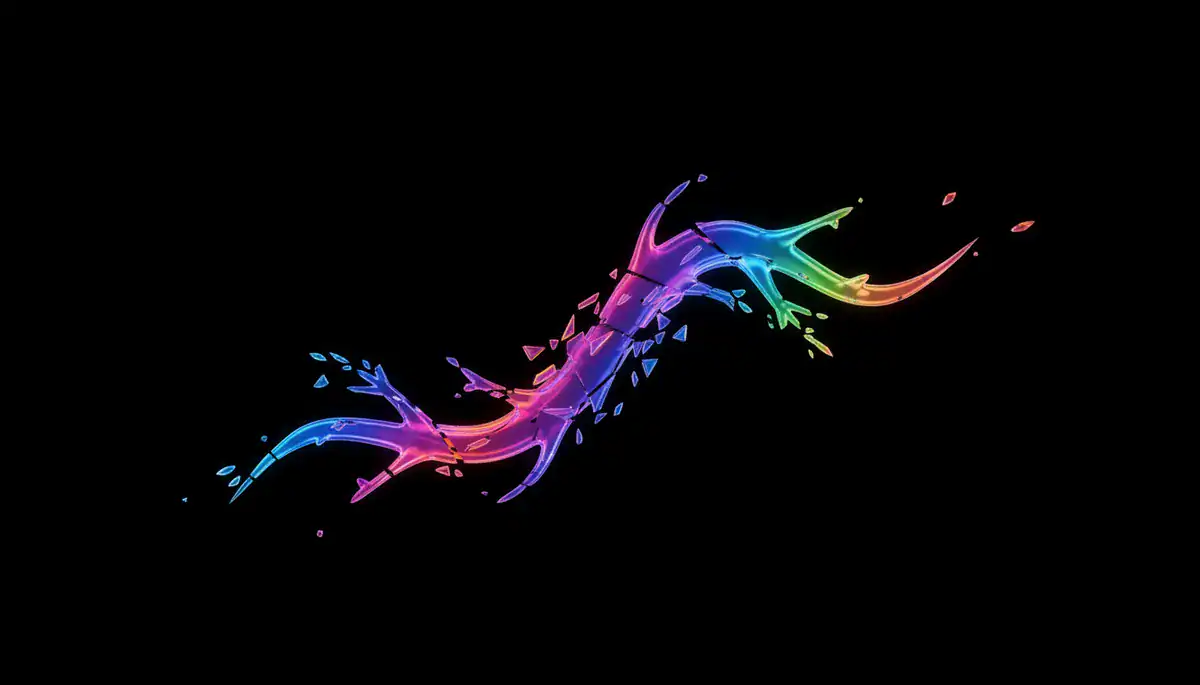
Industry reports indicate that responsive logos—those that simplify or expand depending on screen size—are now a baseline requirement. But the trend goes further into “fluid logos.” These are identities that appear soft-edged, melting, or in constant motion. They feel biological rather than industrial. This adaptability signals to the consumer that the brand is native to the digital ecosystem, capable of shifting shapes without losing its core brand identity.
| Context | Traditional Logo Strategy | Modern Dynamic Strategy |
|---|---|---|
| Mobile App | Shrunk down version of full logo | Simplified icon or “sigil” variant |
| Social Media | Static JPEG profile picture | Animated loop or motion-responsive avatar |
| Website Header | Fixed position and color | Color adapts to background scroll or dark mode |
Actionable Advice: When designing, do not start with a static canvas. Think in motion. Ask yourself: “How does this logo breathe?” Ensure your design system has at least three variants: a master mark, a simplified icon, and a motion behavior.
The Power of Imperfection: The Nike Swoosh Lesson
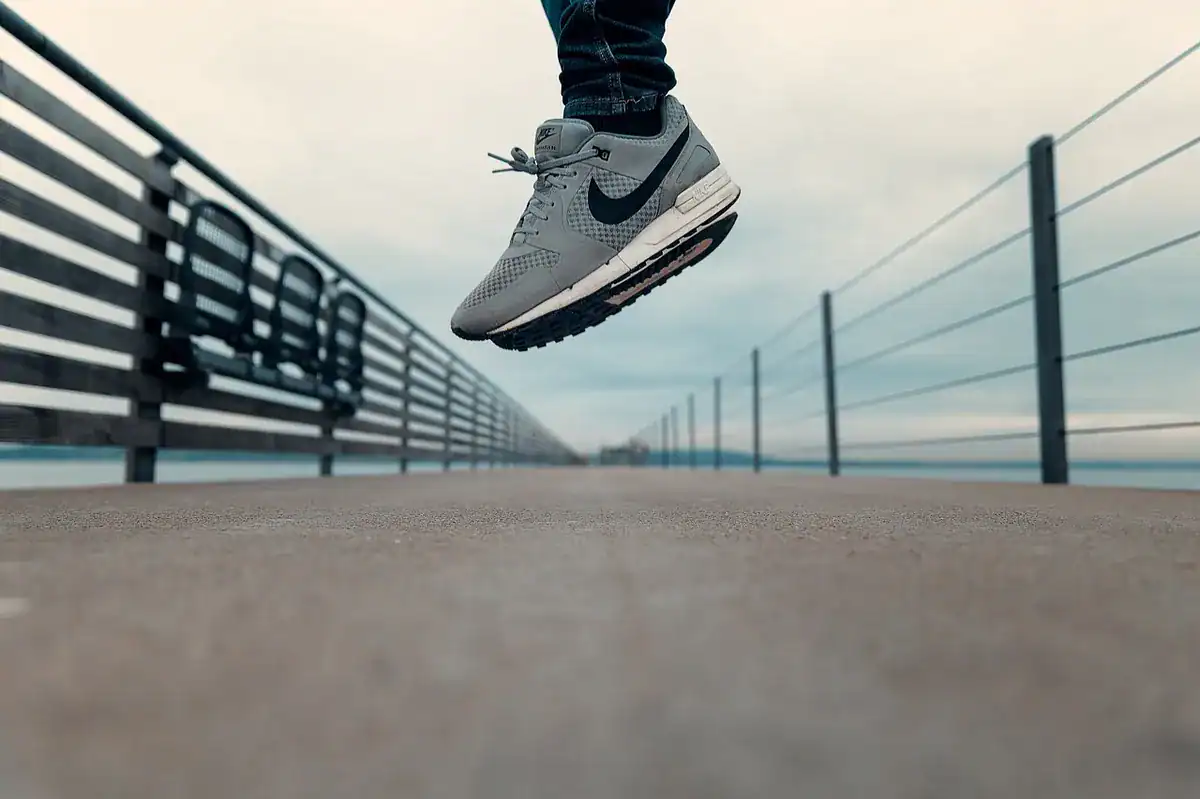
We often think a “cool” logo must be an instant masterpiece, but history tells a different story. The Nike Swoosh is the ultimate case study in rule-breaking and abstraction. Designed by student Carolyn Davidson for a mere $35 in 1971, it was not immediately loved. Co-founder Phil Knight famously remarked, “I don’t love it, but it will grow on me.”
The genius of the Swoosh wasn’t in its immediate beauty, but in its abstraction. It represented the wing of a goddess and the concept of motion itself. It broke the rule that a logo must literally depict the product (shoes). Over decades, Nike stripped away the text, leaving only the symbol—a bold move that cemented its status as a global icon. This proves that a “cool” logo is often one that is simple enough to be drawn by a child but deep enough to carry decades of marketing narrative.
- Why the Swoosh Works:
- Speed: The shape physically implies movement and velocity.
- Simplicity: It survives extreme scaling, from a sneaker tongue to a billboard.
- Abstraction: It allows the consumer to project their own meaning (victory, effort, sport) onto the mark.
Actionable Advice: Do not fear abstraction. If your logo requires a tagline to explain it, it might be too literal. Aim for a shape that embodies the feeling of your service rather than the service itself.
Balancing Tech Efficiency with Human Soul
There is a tension in the modern market between automation and authenticity. On one hand, we have powerful AI tools; on the other, a consumer desire for “soul.” The most successful modern logos bridge this gap. They use technology to iterate rapidly but apply a human filter to ensure emotional resonance.
Platforms like Ailogocreator exemplify this modern workflow. They allow creators to generate hundreds of distinct concepts based on modern logo trends in seconds—handling the technical heavy lifting of geometry and balance. This frees up the designer to act as a curator, selecting the “coolest,” most rule-breaking options and refining them with a human touch. This hybrid approach allows for the creation of professional yet edgy designs that would take weeks to produce manually.
Actionable Advice: Use advanced generation tools to explore “wild card” ideas you wouldn’t normally sketch. Look for the happy accidents—the generated shapes that look slightly odd or unexpected—and refine those into your unique brand mark.

Future-Proofing: Neuro-inclusive and Atmospheric Design
Looking ahead, “cool” is becoming synonymous with “inclusive” and “atmospheric.” Recent design forecasts for 2026 highlight a shift toward neuro-inclusive design—using colors and patterns that are accessible and soothing rather than overstimulating.
Simultaneously, we are seeing the rise of “atmospheric identities.” These are logos defined by gradients, soft transitions, and ambient light rather than hard lines. They evoke a mood or a vibe, fitting perfectly into the immersive worlds of VR and AR. A logo that glows or emits light is inherently more engaging on an OLED screen than a flat black-and-white stamp.
- Key Future Elements:
- Soft Gradients: Replacing solid fills to create depth.
- Bio-luminescence: Neon hues that look like they are glowing.
- Cultural Signals: Designs that avoid culturally insensitive imagery and embrace global adaptability.
Actionable Advice: Test your logo in “dark mode.” If it disappears or looks flat, you are missing a massive opportunity for atmospheric impact. Add a glow layer or a gradient variant for digital displays.
FAQ
Q: Is minimalism dead in logo design?
A: Strict, sterile minimalism is fading. It is being replaced by “warm minimalism”—designs that are simple but use warm colors, soft curves, or hand-drawn elements to feel more human and less corporate.
Q: What makes a logo “responsive”?
A: A responsive logo changes its size, complexity, or layout based on where it is displayed. It might drop the text on a mobile screen or simplify the icon on a smartwatch to ensure it remains legible.
Q: Why do “ugly” logos seem popular right now?
A: This is the “anti-design” trend. Brands use raw, clashing, or unpolished visuals to signal authenticity and stand out against the sea of perfectly polished, template-based competitors. It grabs attention by breaking expectations.
Q: Can a small business afford dynamic branding?
A: Absolutely. You don’t need a million-dollar budget. Start by creating a simple GIF version of your logo for social media and ensuring you have a simplified icon for small screens. This creates the illusion of a dynamic system with minimal effort.
Conclusion and Actionable Suggestions
The definition of a “cool” logo has shifted from “perfect and static” to “authentic and alive.” To succeed in the modern market, you must be willing to break the rules of traditional graphic design. Consumers are rewarding brands that take risks, show vulnerability, and adapt to their digital environments.
- Embrace Imperfection: Add noise, texture, or hand-drawn elements to your design to avoid the “AI sheen.”
- Design for Motion: Your logo should have a defined behavior. How does it enter the screen? How does it loop?
- Simplify for Scale: Follow the Nike Swoosh principle. Can your logo be recognized if drawn in the sand with a stick?
- Leverage Modern Tools: Use efficient platforms like Ailogocreator to rapidly prototype different aesthetics, from retro-futurism to minimalist abstraction.
- Audit for Context: Ensure your visual identity system has specific variants for dark mode, mobile icons, and print to maintain a responsive presence.
CommentsTake the first comment