
A professional, memorable logo can instantly increase your channel’s click-through rate and establish authority before you even start a match. If you are an aspiring streamer, a competitive esports captain, or a gaming content creator, understanding the psychology of visual identity is crucial for standing out in a saturated market. Building a brand requires more than just picking a cool image; it demands a deep dive into Esports Mascot Logo psychology, cohesive Twitch Streamer Branding, and the technical precision of Vector Illustration.
- Why aggressive mascots work better for competitive teams than minimal icons.
- How to utilize Neon Cyberpunk Logo aesthetics to capture attention on dark-mode platforms.
- The structural importance of a Gaming Clan Crest for building team legacy.
- Comparing traditional template tools like the Placeit Logo Maker with modern AI solutions.
The Aggressive Appeal of Esports Mascot Logos
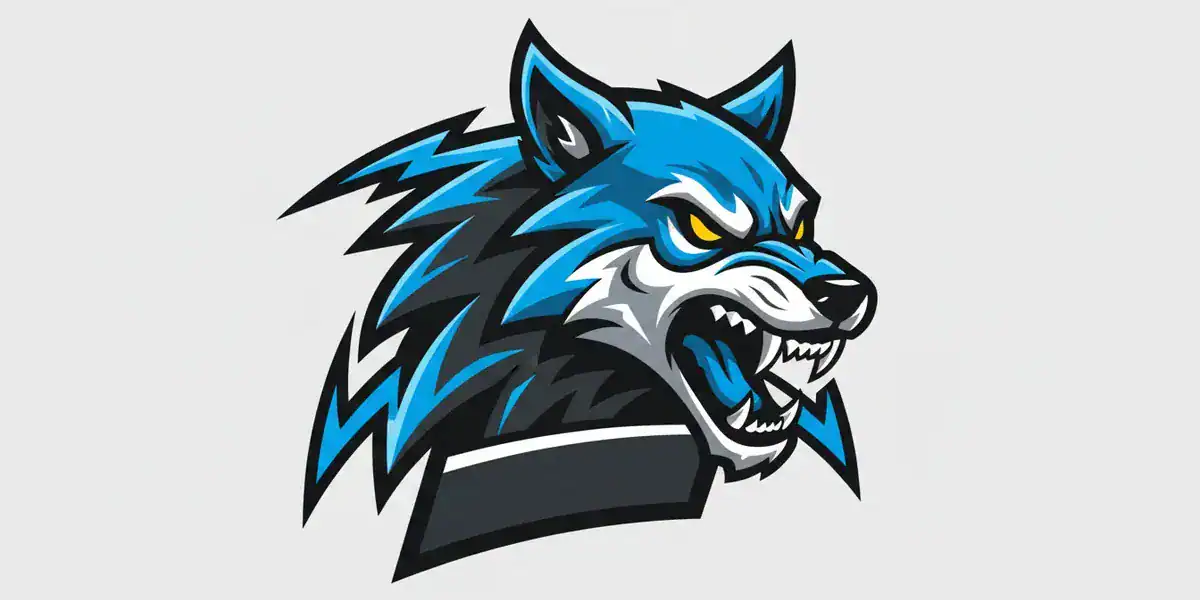
When you look at the top tier of competitive gaming, you notice a pattern. Most professional teams utilize what we call an Esports Mascot Logo. These aren’t just cartoons; they are calculated psychological anchors. Industry analysis indicates that aggressive animals—like cheetahs, dragons, or wolves—convey speed, precision, and dominance.
I have seen countless amateur teams fail to gain traction simply because their branding lacked energy. A mascot needs to stare down the opponent. It requires sharp angles and thick outlines. This is where Vector Illustration becomes non-negotiable. Unlike standard images, vector graphics allow your logo to be scaled up to the size of a billboard or down to a tiny chat emote without losing quality. If your logo creates pixelated artifacts when resized, you look like an amateur.
Designing a mascot involves exaggerating features. A “Cat Superhero” or a “Spartan Warrior” isn’t just a drawing; it’s a symbol of your playstyle. If your team focuses on brute force, a shield-bearing knight fits. If you rely on speed, a stylized falcon works better. The key is to match the visual metaphor with your actual gaming strategy.
Twitch Streamer Branding: Identity for the Solo Creator
Twitch Streamer Branding operates on a different set of rules compared to team logos. Here, the product is you. Market trends suggest a shift towards “faceless” branding, where creators use stylized avatars or masks to maintain privacy while building a persona. This approach allows for a balance between authenticity and comfort, letting the brand exist independently of the creator’s physical appearance.
Your logo is the cornerstone of this identity. It must dictate the color palette for your entire channel—from your stream overlays to your notification alerts. If your logo uses neon green, your “New Follower” alert should flash neon green. This visual consistency builds a subconscious connection with your viewers.
I believe the biggest mistake streamers make is overcomplicating their primary icon. On mobile devices, a Twitch profile picture is tiny. A complex scene will look like a smudge. You need bold, simple shapes. Think of a “Glitch” effect text or a high-contrast minimalist face. It needs to be readable at 50×50 pixels.
Crafting a Legacy with a Gaming Clan Crest
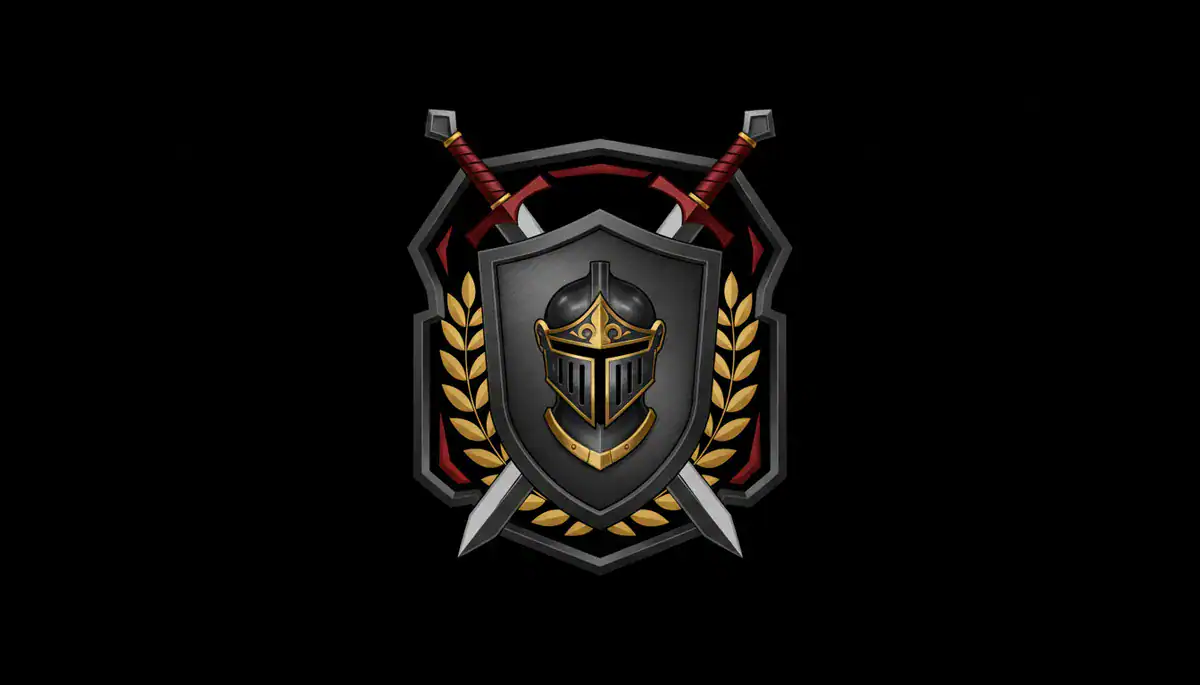
For squads that value history and hierarchy, a Gaming Clan Crest is often superior to a mascot. Crests draw from traditional heraldry—shields, banners, and crossed weapons—to imply stability and long-standing brotherhood. This style is particularly effective for RPG guilds, strategy clans, or military simulation groups.
A crest says, “We are an institution.” It moves away from the “hype” of modern esports and leans into “legacy.” When designing a crest, symmetry is your friend. A central element, such as a skull or a helmet, flanked by laurels or wings, creates a sense of balance.
Using dark, muted tones with a single accent color (like deep crimson or royal gold) often works best for this style. It separates your clan from the neon-soaked visuals of high-speed shooters, positioning you as a serious, disciplined unit.
Visual Trends: Neon Cyberpunk and Typography
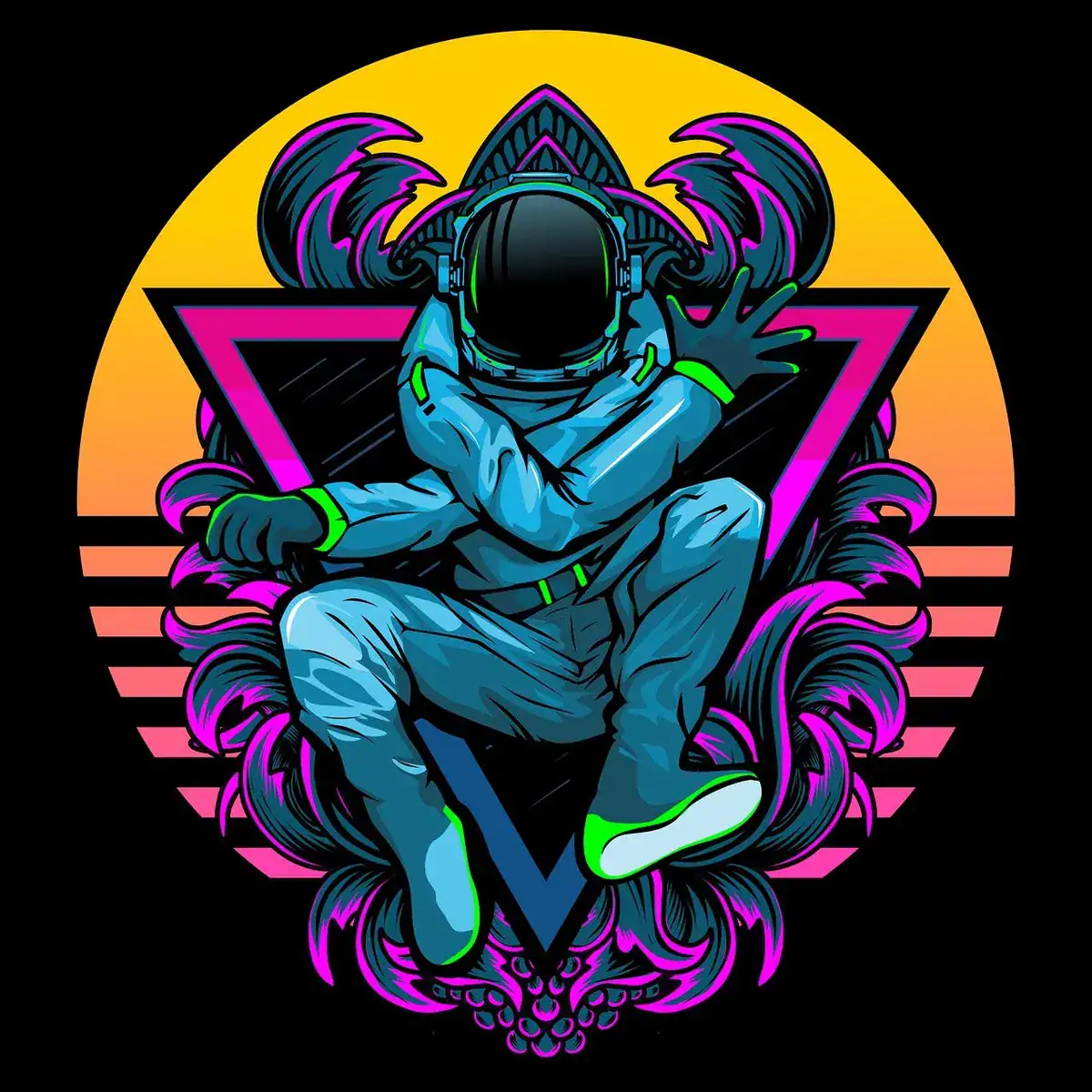
The Neon Cyberpunk Logo aesthetic has dominated the gaming space for the last few years, and it isn’t going away. This style relies heavily on high-contrast colors—cyan, magenta, and electric purple—set against deep black backgrounds. It mimics the lighting of gaming setups and RGB peripherals, making it feel native to the environment.
Typography in this style is critical. You cannot use a standard serif font. You need distinct, futuristic lettering that looks like it was stamped on the side of a spaceship. Glitch effects, where the text appears to be fracturing, add a layer of digital dynamism.
However, a word of caution: readability is still king. I often see designers get so lost in “cyber” effects that the team name becomes unreadable. If a viewer cannot read your name in under a second, the design has failed. Use the neon effects for the border or the icon, but keep the text sharp and legible.
Modern Tools: From Templates to AI Generation
Historically, creators relied on template sites like the Placeit Logo Maker to get started. These platforms offer a “fill-in-the-blank” approach, which is great for beginners but often leads to generic results. You might end up with the same “Angry Bear” logo as five other channels.
The industry is shifting towards smarter solutions. We are seeing a rise in tools that understand design context better than simple drag-and-drop templates. For creators who want a unique identity without hiring an expensive agency, Ailogocreator represents a significant leap forward. It utilizes advanced algorithms to generate logos that feel custom-made rather than assembled from a stock library.
This transition to AI-assisted design allows for rapid iteration. You can test fifty variations of a “Cyberpunk Samurai” in the time it used to take to edit one template. For a fast-moving industry like gaming, this speed is a competitive advantage.
FAQ
Q: Should I use my face or a mascot for my Twitch logo?
A: It depends on your content. If you use a webcam and your personality is the main draw, a stylized version of your face works well. If you are a high-level gameplay streamer or prefer privacy, a mascot or abstract symbol is safer and easier to merchandise.
Q: What file format is best for gaming logos?
A: Always prioritize vector formats (SVG, AI, EPS) for the master file. This ensures your Vector Illustration remains crisp at any size. For uploading to platforms like Twitch or YouTube, you will export these as high-quality PNGs with transparent backgrounds.
Q: How many colors should a gaming logo have?
A: Keep it simple. Two to three main colors are usually enough. A primary color (like Neon Blue), a secondary contrast color (like White), and a background color (usually Black or Dark Grey). Too many colors make printing on jerseys expensive and messy.
Q: Is the Neon Cyberpunk style suitable for all games?
A: Not necessarily. It fits FPS, Battle Royale, and Sci-Fi games perfectly. However, if you stream cozy games, historical strategy, or fantasy RPGs, a neon aesthetic might clash with your content’s vibe. Match the logo style to the genre you play most.
Conclusion and Actionable Suggestions
Your gaming logo is the flag you plant in the digital ground. It needs to be bold, scalable, and reflective of the community you want to build. Whether you choose a menacing mascot or a regal crest, the execution matters more than the concept.
- Audit your current branding: Does your logo look good when shrunk down to the size of a mobile chat icon? If not, simplify it.
- Define your archetype: Are you the “Aggressive Pro” (Mascot), the “Tactical Squad” (Crest), or the “Entertainer” (Avatar)? Pick one lane and stick to it.
- Invest in Vectors: Never rely on a JPEG for your master file. Ensure you have scalable Vector Illustration files for future merchandise.
- Leverage new tech: Don’t just settle for overused templates. Explore tools like Ailogocreator to generate fresh, unique ideas that separate you from the crowd.
- Check your contrast: Ensure your colors pop against both the light and dark modes of streaming platforms.
CommentsTake the first comment