
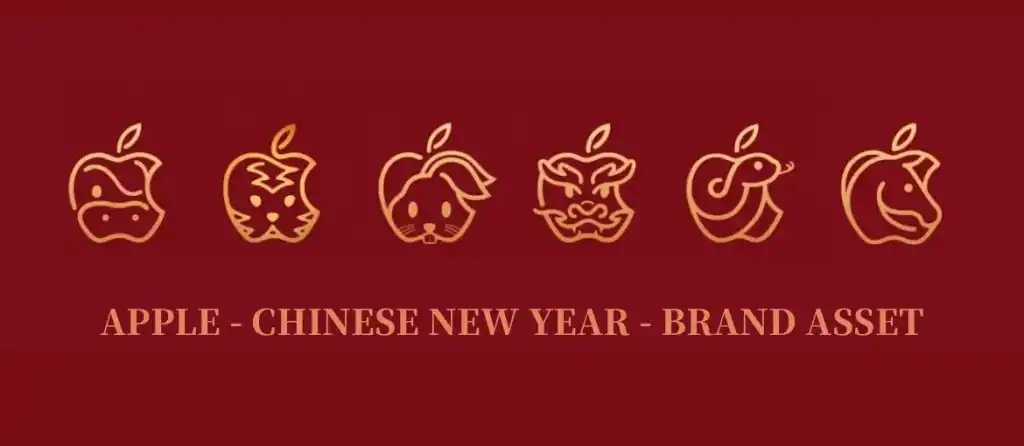
Every year, as Chinese New Year approaches, global brands rush to release festive visuals. Red backgrounds, zodiac animals, symbolic patterns — the formula is familiar.
Most of these designs disappear as soon as the holiday ends.
Apple’s don’t.
Year after year, Apple’s Chinese New Year visuals feel instantly recognizable, even before the zodiac sign is identified. The designs don’t shout. They don’t chase trends. And yet, they consistently reinforce Apple’s brand value.
This raises an important question:
Why can Apple turn Chinese New Year design into a long-term brand asset, while most brands treat it as a one-time campaign?
Most Chinese New Year Designs Are Short-Term Marketing Campaigns

For many brands, Chinese New Year design is approached as a seasonal task rather than a strategic decision.
The common pattern looks like this:
- A new visual style every year
- Heavy use of festive symbols and colors
- No connection to the brand’s existing visual identity
Once the festival is over, the design loses relevance. It doesn’t contribute to recognition, consistency, or long-term brand memory.
In other words, the design serves the festival — not the brand.
This is why many Chinese New Year campaigns feel interchangeable. If you remove the logo, it becomes difficult to tell which brand the design belongs to.
Apple’s Brand Advantage Isn’t Aesthetics. It’s a Visual Identity System.
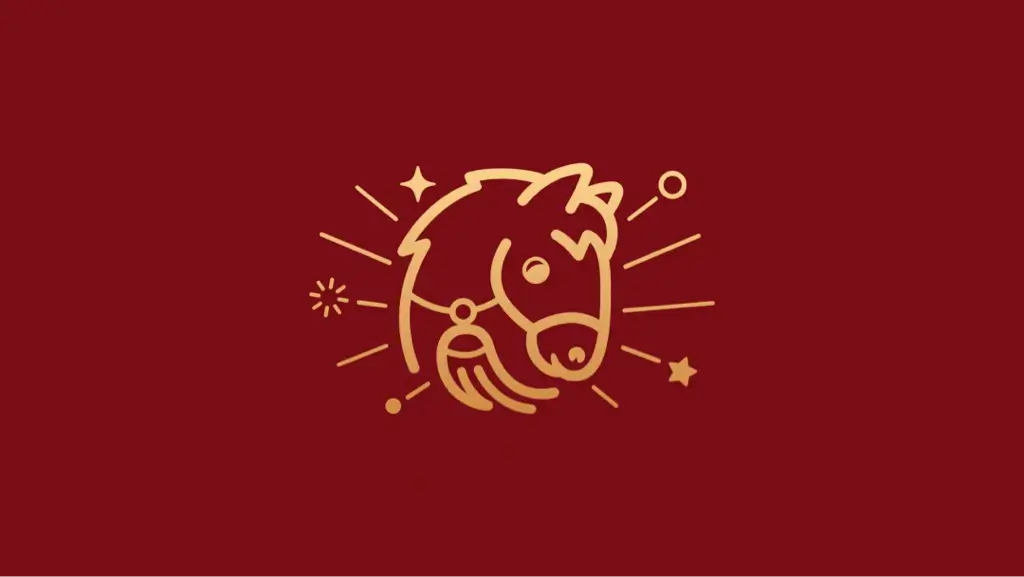
Apple’s Chinese New Year visuals work not because they are more decorative, but because they are more disciplined.
Apple does not design for Chinese New Year. It designs within an existing visual identity system.
Key characteristics remain consistent:
- Minimalist composition
- Strong use of negative space
- Controlled color palettes
- Clear hierarchy and form logic
The zodiac element — whether it’s a tiger, rabbit, dragon, or horse — is treated as a carrier, not the focal point. The brand system always comes first.
As a result, Apple’s seasonal visuals feel familiar before they feel festive.
That familiarity is not accidental. It is the outcome of a well-defined visual system extended into a cultural context.
Why Global Brands Often Design Less — Not More
One reason Apple’s approach stands out is restraint.
Mature global brands don’t need to prove that they understand a culture by visual overload. They rely on recognition rather than explanation.
In contrast, many brands attempt to communicate cultural relevance through:
- Excessive symbolism
- Overly literal interpretations
- Trend-driven visual styles
The irony is that the more a brand tries to look festive, the less recognizable it often becomes.
Apple understands that cultural respect does not require visual noise. By designing less, it allows the brand identity to remain clear — across markets, languages, and traditions.
Consistency, not decoration, is what turns design into an asset.
When Seasonal Design Becomes a Brand Asset
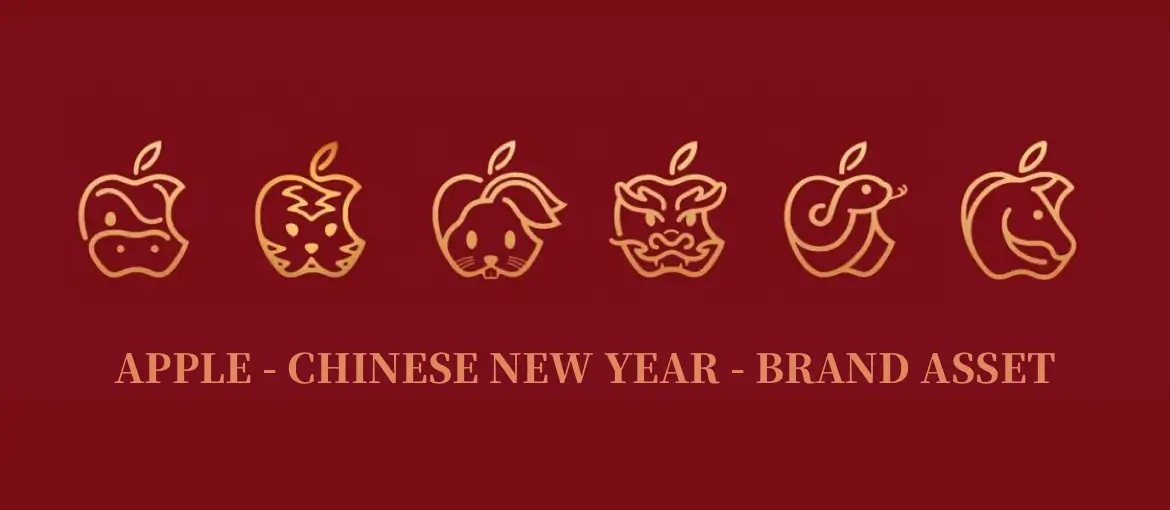
A seasonal design becomes a brand asset only when it meets three criteria:
- It can be reused or evolved The design logic is repeatable, not disposable.
- It remains recognizable across markets The visual language survives cultural translation.
- It strengthens the core brand identity The season adapts to the brand — not the other way around.
Apple’s Chinese New Year designs meet all three. Each year adds another layer to the same system, reinforcing brand memory rather than resetting it.
This is the difference between a campaign and an asset.
Brand Systems Matter More Than Creative Inspiration
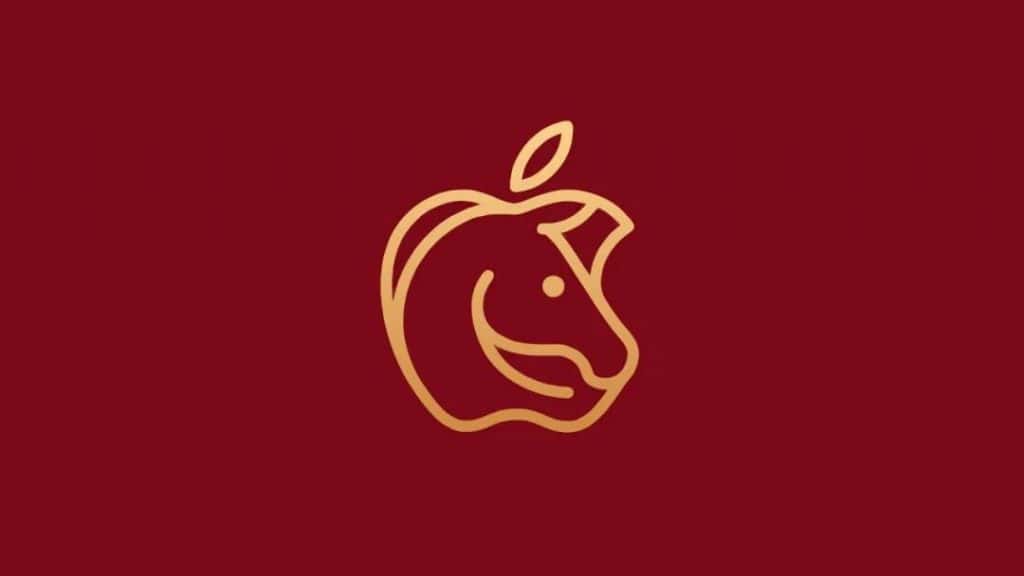
Many brands believe strong visual identity comes from creative inspiration alone. In reality, inspiration without structure rarely scales.
Logos, seasonal visuals, and marketing assets perform best when they are built on systems:
- Defined proportions
- Consistent typography
- Repeatable visual rules
This is why more modern teams focus on establishing a solid foundation first, before exploring variations. Increasingly, AI-powered tools are being used to help brands create consistent, adaptable visual identities from the start.
Platforms like ailogocreator.io reflect this shift — prioritizing scalable logo systems over one-off visuals.
When a brand system is strong, seasonal design becomes an extension, not a reinvention.
Final Thoughts
Apple’s Chinese New Year design succeeds not because it is festive, but because it is unmistakably Apple.
The real lesson isn’t about zodiac symbols or holiday colors. It’s about discipline, consistency, and long-term thinking.
Seasonal design comes and goes. Brand assets compound.
And the brands that understand this don’t just celebrate the moment — they build recognition that lasts far beyond it.
CommentsTake the first comment