
Mastering the balance between nostalgic geometry and modern minimalism allows brands to retain deep customer loyalty while seamlessly capturing new market segments. If you are a brand strategist, graphic designer, or gaming enthusiast analyzing how visual identity drives generational retention, this breakdown of Sony visual identity is essential reading. Sony’s journey from Manabu Sakamoto’s original 1994 masterpiece to the sleek PS5 wordmark reveals a masterclass in PlayStation branding, proving that consistency often outweighs radical reinvention.
Here are the core elements of this design evolution:
- The strategic brilliance behind the original 3D optical illusion.
- How color psychology shifted from 90s vibrancy to premium monochrome.
- The hidden meaning behind the iconic geometric controller symbols.
- Lessons on maintaining brand equity during drastic product updates.
The Genesis of a Geometric Icon: Manabu Sakamoto’s Vision
The original PlayStation logo is not just a flat graphic; it is a statement of intent. When Manabu Sakamoto designed the emblem in 1994, he deliberately rejected the standard 2D trends of the era. I find his approach revolutionary because he visualized the “P” and “S” not as letters, but as 3D objects existing in a digital space. The upright “P” standing firm, casting a shadow that forms the “S”, perfectly symbolized the console’s capability to render 3D polygon graphics—a massive leap from the 2D pixel art of the time.
Sakamoto utilized a vibrant palette of red, yellow, green, and blue. These primary colors were not chosen at random. They represented passion, joy, and the energy of a new gaming era. In my analysis of PlayStation logo history, this specific use of color created a distinct separation from the “toy-like” branding of earlier eras, positioning the console as a sophisticated entertainment machine. The geometric precision of the design ensured that even as technology advanced, the core identity remained structurally sound.
Key Design Elements of the 1994 Logo:
- 3D Perspective: Mimics the console’s 3D rendering capabilities.
- Primary Colors: Red, Blue, Yellow, and Green to convey energy.
- Interlocking Typography: The “S” acts as the shadow of the “P”.
- Geometric Stability: Balanced proportions that work on screens and print.
According to design history archives, Sakamoto submitted dozens of variations before finalizing the iconic “standing P” design. His persistence in using 3D spatial logic established a visual foundation that competitors struggled to replicate.
Actionable Suggestion: When designing for tech brands, incorporate elements that visualize the product’s core function—like depth for 3D rendering or motion for speed—rather than relying solely on abstract aesthetics.

The Monochromatic Shift: From Playful to Premium
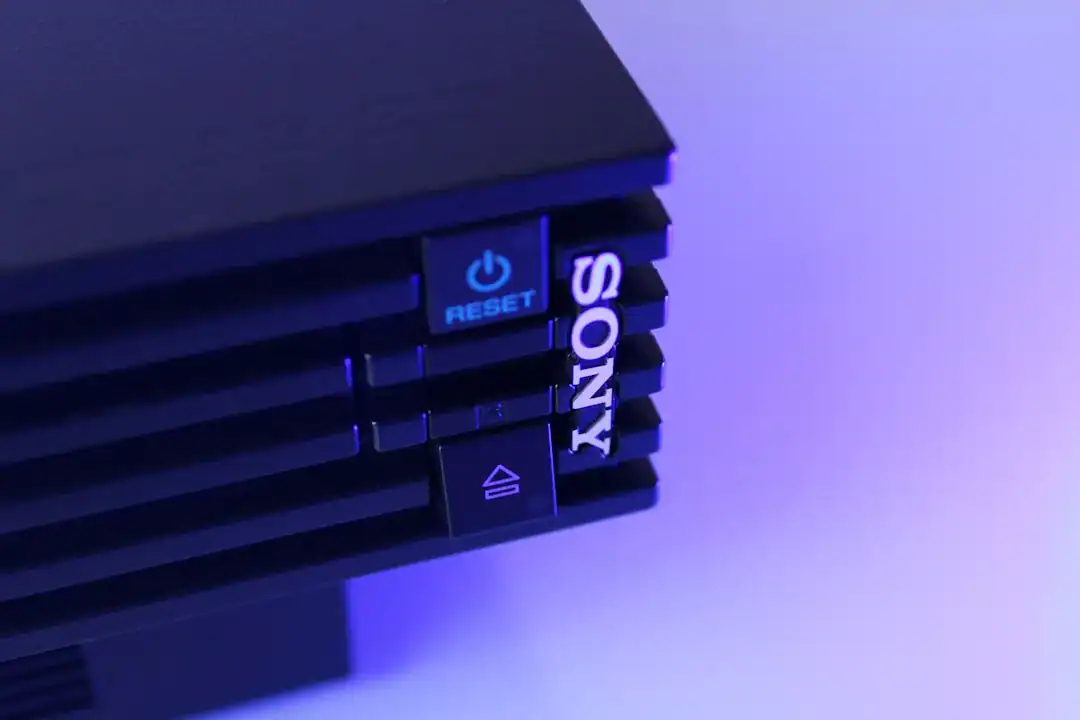
As the console generations evolved, so did the Sony visual identity. The transition from the colorful PS1 logo to the stark, monochromatic branding of the PS2, PS3, and PS4 marks a significant pivot in PlayStation branding strategy. I believe this shift was necessary to signal maturity. By the time the PS2 arrived, the gaming demographic had grown up. They were no longer just kids; they were teenagers and adults who wanted a sleek, high-tech device in their living rooms, not a colorful toy.
The move to a single-color logo (usually white on black or silver) aligned the brand with high-end electronics rather than children’s products. This “black tie” aesthetic communicates power, luxury, and confidence. It allows the hardware design to take center stage. While the original colorful logo still evokes nostalgia, the modern PS logo evolution favors adaptability. A white logo overlays perfectly on game box art, digital menus, and marketing materials without clashing with the artwork.
Benefits of Monochromatic Branding:
- Versatility: Works on any background color or texture.
- Sophistication: Appeals to an older, higher-spending demographic.
- Focus: Reduces visual noise, directing attention to the content.
- Timelessness: Black and white trends rarely fade compared to color palettes.
Industry analysis indicates that brands maintaining a consistent monochromatic logo across varying product lines see higher recognition rates among adult consumers. This consistency builds a sense of reliability.
Actionable Suggestion: If your brand is targeting a maturing audience, strip away non-essential colors. Test your logo in pure black and white; if it loses impact, the geometry needs refinement.
The Secret Language of Shapes: Triangle, Circle, Cross, Square
You cannot discuss geometric logo design in the PlayStation ecosystem without examining the four symbols that have become a secondary logo for the brand: the Green Triangle, Red Circle, Blue Cross, and Pink Square. These shapes are arguably as recognizable as the main “PS” mark. Unlike other manufacturers who used letters (A, B, X, Y), Sony’s designers chose universal geometric concepts.
I have always admired the logic behind these choices. The Triangle represents a viewpoint or direction. The Square symbolizes a piece of paper, representing menus or documents. The Circle and Cross represent “Yes” and “No” (though Western localization famously swapped these functions). This creates a visual language that transcends language barriers. It is a brilliant example of functional design becoming brand identity. Today, these four shapes appear on merchandise, apparel, and advertisements, often without the main logo, yet the association is instant.
Symbol Meanings & Design Intent:
- Triangle (Green): Viewpoint/Head direction.
- Square (Pink): Menus/Documents.
- Circle (Red): Decision/Yes (Eastern standard).
- Cross (Blue): Cancellation/No (Eastern standard).
Market research suggests that iconic symbols often have higher recall value than text-based logos because the brain processes shapes faster than words. Sony leveraged this by turning functional interface buttons into brand assets.
Actionable Suggestion: Develop a set of secondary visual assets or icons that complement your main logo. These “brand patterns” can carry your identity in spaces where the full logo might feel repetitive.

Strategic Consistency: The Power of Incremental Change
The release of the PS5 logo caused a stir in the design world—mostly because it barely changed. It was essentially the PS4 logo with a “5”. While some critics called it lazy, I see it as a stroke of genius in PlayStation logo history. Radical rebrands are risky. They can alienate a loyal user base. By keeping the font, weight, and spacing identical to the previous generation, Sony communicated a clear message: “This is the platform you know and trust, just better.”
This strategy of incremental evolution preserves brand equity. When you look at the PS logo evolution from PS3 (which briefly experimented with a different typeface) back to the consistent geometric sans-serif of PS4 and PS5, you see a correction towards stability. The geometric logo design ensures that the brand feels like a continuous family rather than disjointed products.
Timeline of Visual Consistency:
- PS2: Introduced the sharp, angular aesthetic.
- PS3 (Early): Experimented with rounded, serif fonts (an outlier).
- PS3 (Slim) to PS4: Returned to the modern, geometric sans-serif.
- PS5: Maintained exact font weight and curvature for seamless transition.
Data from consumer psychology studies shows that familiarity breeds trust. When a user upgrades a device, familiar branding reduces the cognitive load and anxiety associated with learning a new system.
Actionable Suggestion: Do not rebrand for the sake of novelty. If your current visual identity has high equity, refine it subtly rather than replacing it entirely.

Modern Efficiency in Geometric Design
Creating a logo that stands the test of time, like Sakamoto’s work, requires a deep understanding of geometry and balance. For small businesses or startups today, achieving this level of professional polish can be daunting without a massive budget. However, modern technology has democratized this process.
Tools like Ailogocreator utilize advanced algorithms to generate geometric designs that adhere to these timeless principles. By analyzing millions of successful design patterns, these platforms can suggest layouts that balance negative space and structural integrity, much like the “P” and “S” interaction. While human intuition is irreplaceable for the final touch, using such efficient solutions allows designers to rapidly prototype concepts that are mathematically sound and visually pleasing.
Steps to Test Logo Longevity:
- Scale Test: Does it look good on a business card and a billboard?
- Monochrome Test: Does it work in black and white?
- Silhouette Test: Is it recognizable by its outline alone?
- Context Test: Does it fit the industry aesthetic (e.g., tech, luxury)?
Actionable Suggestion: Start your design process in black and white. Focus on the geometry first. Once the shape works, color is just an enhancement, not a crutch.
FAQ
Who designed the original PlayStation logo?
The original PlayStation logo was designed by Japanese graphic designer Manabu Sakamoto in 1994. He is also known for designing the VAIO logo. His concept focused on 3D space and optical illusions to represent the console’s 3D capabilities.
What do the geometric shapes on the controller buttons represent?
The shapes were designed by Teiyu Goto. The Triangle represents a viewpoint; the Square symbolizes a menu or document; the Circle represents “Yes” or decision-making; and the Cross represents “No” or cancellation.
Why did the PlayStation logo change to black and white?
The shift to a monochromatic scheme (black, white, silver) occurred to signal a more mature, premium brand identity. As the gaming audience aged, Sony wanted to position the console as a sophisticated home entertainment hub rather than just a toy.
How has the PS logo remained relevant for over 30 years?
The logo’s relevance stems from its strong geometric foundation and adaptability. While the color palette evolved to match modern trends, the core shape and the “PS” mark remained largely consistent, building immense brand equity and recognition.
Conclusion and Actionable Suggestions
The enduring success of the PlayStation visual identity proves that great design is not about following every trend, but about establishing a strong geometric logic that can evolve. From Sakamoto’s 3D illusion to the minimalist wordmarks of today, Sony has shown that consistency builds legacy.
If you are building a brand, apply these lessons:
- Prioritize Geometry: Build logos with clear, structural shapes that hold up in 3D and 2D spaces.
- Own a Color: Or lack thereof. Decide if you need specific colors to convey emotion or if monochrome communicates the premium status you desire.
- Create Secondary Assets: Don’t rely solely on one logo. Develop icons (like the Triangle, Circle, Cross, Square) that can represent your brand in UI and merchandise.
- Iterate, Don’t Destroy: When updating your brand, keep the core elements that customers recognize. Evolution is safer and often more effective than revolution.
- Test rigorously: Ensure your design works in a single color before adding gradients or effects.
CommentsTake the first comment