
Integrating well-chosen script typography into your visual identity is the single most effective way to humanize a brand and establish an immediate emotional connection with your audience. If you are a creative director, boutique owner, or startup founder looking to break free from the sterile uniformity of modern minimalism, this approach is your competitive edge. In a marketplace saturated with cold sans-serif distinctiveness, Elegant script fonts and Handwritten typography reclaim the authenticity of a personal signature, transforming Luxury branding from a concept into a feeling.
- Psychological Depth: Script fonts trigger subconscious associations with personal care, creativity, and artisanal craftsmanship.
- Strategic Variety: Understanding the nuance between formal Modern calligraphy and energetic Brush script determines your brand’s voice.
- Legibility Balance: The thin line between artistic flair and unreadable chaos often decides the success of a Cursive logo design.
- Technological Efficiency: Modern tools allow for the rapid generation of unique, balanced script logos without the high cost of custom lettering.
The Psychology of Curves: Why Handwriting Resonates
We are hardwired to trust the human hand. While geometric fonts signal efficiency and logic, Handwritten typography signals intimacy and presence. In my analysis of recent design trends, I have noticed a distinct shift: brands are moving away from the “corporate Memphis” style toward identities that feel lived-in and organic. This isn’t just aesthetic; it is psychological. A script font acts like a digital signature, implying that a real person stands behind the product.
According to research on font psychology, script typefaces mimic the fluid movements of traditional penmanship, which naturally evokes feelings of empathy and creativity. When a customer sees a fluid, connected typeface, their brain processes it similarly to how it processes a handwritten note from a friend. This creates a “warm” first impression that rigid block letters simply cannot replicate.
Key Emotional Triggers of Script Fonts:
- Elegance: High-contrast strokes suggest sophistication and tradition.
- Creativity: Irregular baselines imply freedom and artistic flair.
- Affection: Looped characters are often associated with romance and care.
- Authenticity: Slight imperfections suggest a non-templated, bespoke origin.
Actionable Suggestion: Use script fonts for your brand’s “voice”—headlines, taglines, or signatures—but never for the “body.” If you want to convey empathy in a marketing email, use a script font for the sign-off, not the main message.
Navigating the Spectrum: From Formal Calligraphy to Brush Script
Not all scripts are created equal, and choosing the wrong style can send a confusing message. I often see brands mix up Modern calligraphy with Brush script, resulting in a visual identity that feels disjointed. Modern calligraphy typically features variable stroke widths and a rhythmic bounce, making it ideal for weddings, high-end lifestyle products, and editorial headers. It feels deliberate and poised.
On the other hand, Brush script is thicker, faster, and more textured. It implies energy, speed, and raw emotion. Industry observations indicate that lifestyle and fitness brands increasingly favor brush styles because they communicate movement and grit. A luxury perfume brand using a dry brush font would look cheap, just as a skate shop using a copperplate script would look confusingly stiff.
Choosing the Right Script Category:
- Formal Scripts: Based on 17th-century writing. High elegance, low readability. Best for heritage brands.
- Casual Scripts: Looks like quick handwriting with a pen. Friendly and approachable.
- Brush Scripts: Created with a brush or marker. Bold and expressive.
- Monoline Scripts: Constant stroke width. Modern, clean, and retro-cool.
Actionable Suggestion: Define your brand’s “energy level” before picking a font. If your brand is calm and expensive, go for a light-weight, high-contrast script. If it is loud and accessible, choose a heavy, textured brush font.
Strategic Implementation in Luxury Branding
In the realm of Luxury branding, less is often more, but the “more” needs to be exquisite. Elegant script fonts are a staple here because they historically represent the time and cost associated with manual penmanship. When I analyze top-tier fashion or cosmetic brands, the use of script is almost always reserved for the logo or a singular campaign focus word. It acts as the jewel in the crown, surrounded by plenty of white space.
Market analysis suggests that luxury consumers perceive products with script labelling as “premium” or “artisanal.” This is because the typography suggests the product was finished by hand. However, the trap here is over-usage. Placing a complex script font on a busy background or using it for ingredients lists destroys the premium feel and replaces it with clutter.
Rules for Luxury Script Usage:
- Kerning is King: Unlike standard text, script letters must flow into each other. Disconnected script looks broken and cheap.
- Contrast Pairing: Always pair a decorative script with a stark, simple sans-serif secondary font to anchor the design.
- Restraint: Use the script for the brand name or the product name only.
Actionable Suggestion: Conduct a “squint test.” Look at your packaging or website design and squint your eyes. If the script font becomes a blurry blob that dominates the hierarchy too much, reduce its size or weight.

Overcoming the Legibility Trap in Cursive Logo Design
The most beautiful logo is useless if no one can read it. Cursive logo design faces a unique challenge: the digital world requires legibility at microscopic sizes (like a favicon or an Instagram profile picture). Many designers fall in love with a swash-heavy font on a 27-inch monitor, only to realize it looks like a smudge on a mobile screen.
Expert commentary on typography emphasizes that legibility in scripts relies heavily on the “x-height” (the height of lowercase letters) and the openness of loops. If the loops in ‘e’, ‘a’, or ‘o’ are too small, they close up when reduced. I have seen countless rebranding efforts fail because the chosen script was too intricate for practical application. Authenticity should never come at the cost of clarity.
Common Legibility Pitfalls:
- Excessive Flourishing: Too many swirls distract from the character shapes.
- Tight Spacing: Script letters need specific spacing to connect naturally; too tight, and they overlap; too loose, and the illusion breaks.
- Low Contrast: Using a thin script on a busy background renders it invisible.
Actionable Suggestion: Always test your script logo in a single color (black on white) at 1 inch wide. If you cannot instantly recognize the brand name, the font is too complex.
Leveraging Technology for Unique Script Identities
Historically, getting a truly unique handwritten logo required hiring a calligrapher for hundreds or thousands of dollars. Today, technology has democratized access to high-quality, aesthetically balanced design. We are seeing a rise in smart tools that understand the flow and weight of Handwritten typography, allowing business owners to generate professional assets instantly.
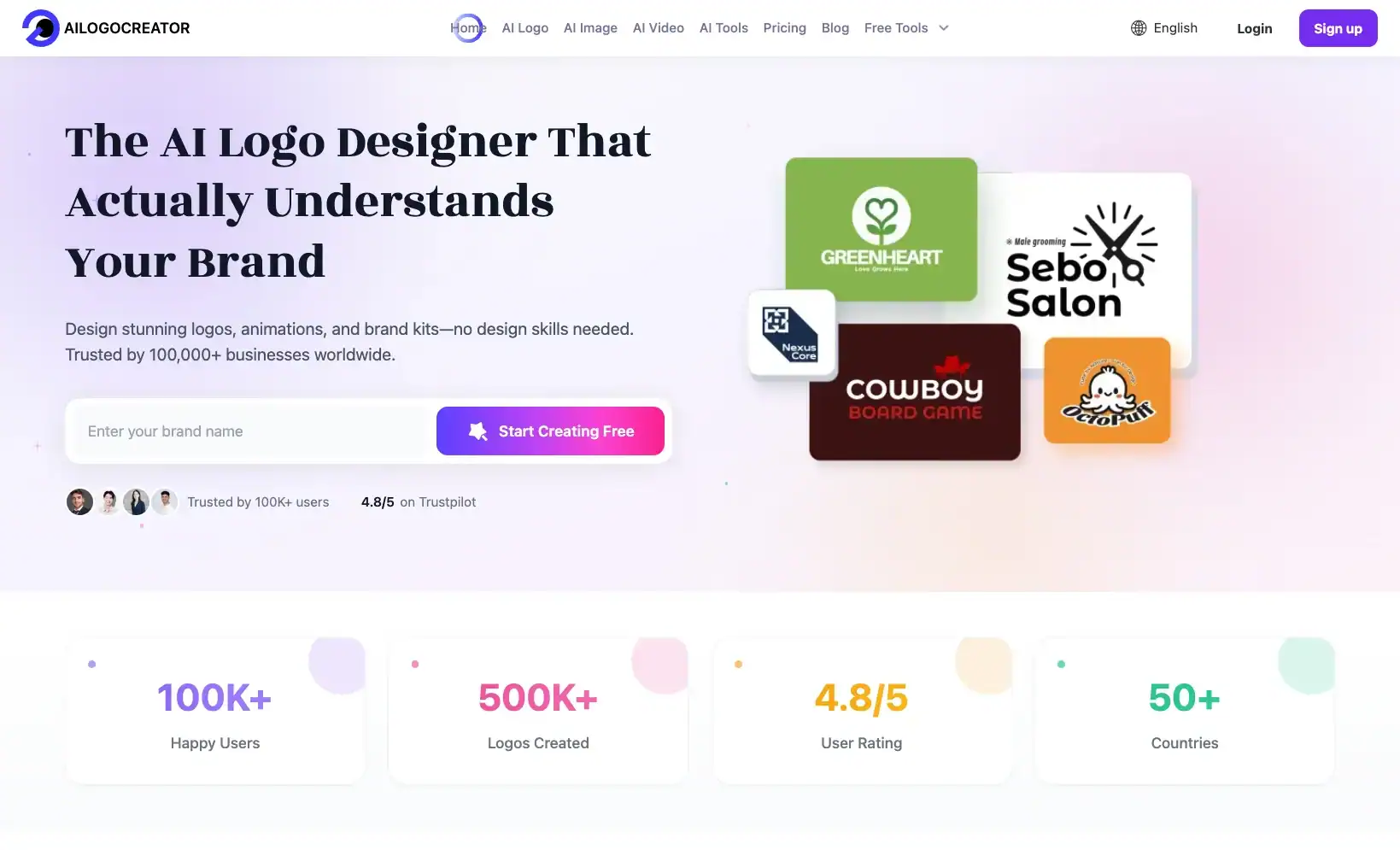
For those who lack the budget for a custom typographer but demand a result that looks bespoke, Ailogocreator stands out as a robust solution. Unlike basic template editors, it intelligently balances stroke width and spacing to ensure the generated scripts maintain professional legibility while capturing that elusive human touch. This represents a massive leap in productivity, allowing you to iterate through dozens of “handwritten” concepts in minutes rather than weeks.
Benefits of AI-Assisted Script Design:
- Optical Balance: Algorithms ensure that the visual weight of the wordmark is distributed usage.
- Speed of Iteration: You can test a “formal” vs. “casual” vibe instantly.
- Cost-Effectiveness: achieving a high-end look without the agency price tag.
Actionable Suggestion: Use AI tools to generate a variety of script baselines—horizontal, arched, or slanted. A slight upward slant (about 10 degrees) often subconsciously communicates optimism and growth.
FAQ
Q: Can I use script fonts for my website’s body text?
A: No. Script fonts are designed for display purposes (headlines, logos) and are difficult to read in long paragraphs. Using them for body text will frustrate users and increase your bounce rate.
Q: Are script fonts only suitable for feminine brands?
A: Not at all. While light, swirly scripts can appear feminine, thick, textured Brush script fonts or jagged, messy handwriting styles are frequently used in masculine industries like barbering, automotive, and extreme sports.
Q: How do I choose a secondary font to pair with a script logo?
A: Contrast is key. If your script is round and flowing, pair it with a structured, geometric sans-serif or a clean, classic serif. Avoid pairing two script fonts together, as they will compete for attention.
Q: What is the difference between a script font and a handwritten font?
A: “Script” usually refers to connected letters derived from calligraphy (formal or casual). “Handwritten” is a broader category that includes disconnected print styles, doodles, and markers that look like natural writing but aren’t necessarily cursive.
Conclusion and Actionable Suggestions
The resurgence of Elegant script fonts is a direct response to the digital coldness of the last decade. By injecting the imperfections and flow of the human hand into your branding, you signal to customers that your brand is personal, crafted, and authentic. Whether you opt for the prestige of Modern calligraphy or the raw energy of Brush script, the goal remains the same: to create a connection that feels less like a transaction and more like a relationship.
To successfully implement this strategy:
- Audit Your Typography: Check if your current font stack is too rigid. Introduce a script font for accents or taglines to soften the brand image.
- Define Your Persona: Match the script style to your brand personality—messy for creative/youth brands, refined for luxury/heritage brands.
- Prioritize Readability: Never sacrifice clarity for style. Test your Cursive logo design at small sizes immediately.
- Leverage Smart Tools: Utilize platforms like Ailogocreator to efficiently explore different script aesthetics that are pre-optimized for balance and legibility.
- Use Sparingly: Treat script typography like a strong spice; a little creates a masterpiece, but too much ruins the dish.
CommentsTake the first comment