
You can transform simple playtime into a developmental powerhouse by understanding the design logic behind plastic bricks. If you are a parent or educator aiming to boost cognitive growth, looking beyond the instruction manual reveals how color and shape directly influence a child’s brain. The vibrant hues of LEGO Classic sets are not just aesthetic choices; they are calculated triggers for open-ended play that sharpen spatial reasoning, refine fine motor skills, and facilitate deep learning through play.
- High color saturation acts as a psychological cue to sustain focus and energy during play.
- The resistance and size of bricks force the development of precise fine motor skills and hand strength.
- Open-ended construction without instructions fosters superior spatial reasoning and mathematical logic.
- Strategic color combinations can regulate mood, balancing excitement with concentration.
The Science of Color Saturation in Toy Design
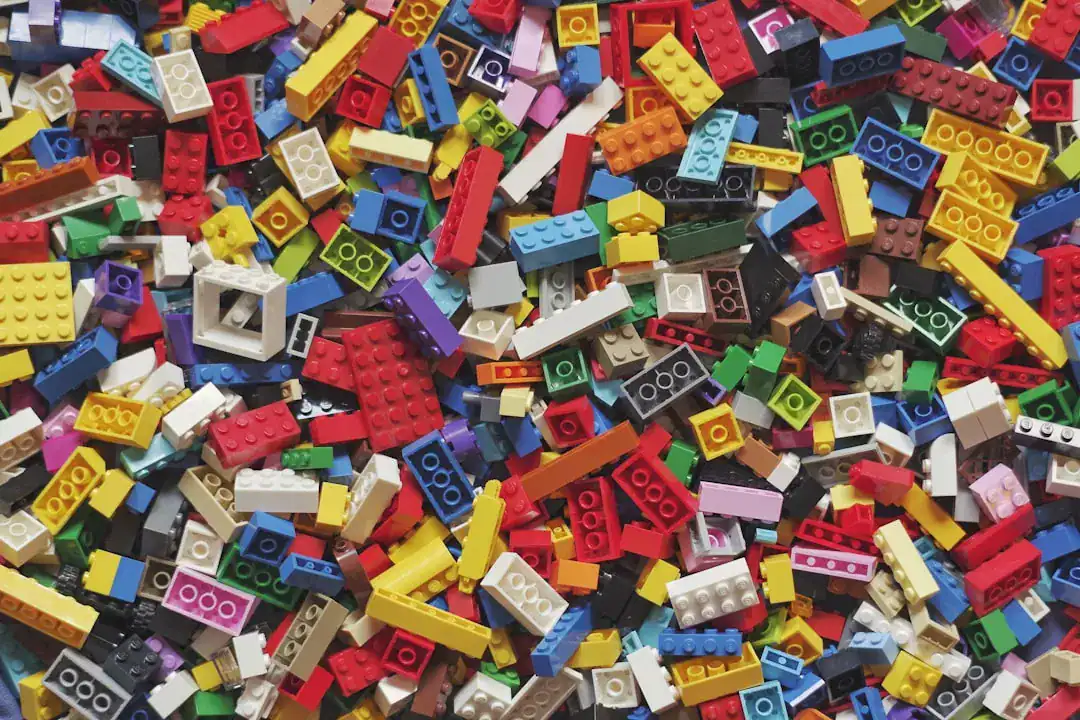
When you dump a box of bricks onto the floor, the first thing that hits you is the color. This isn’t accidental. Manufacturers prioritize high saturation—the intensity of a color—because children’s developing eyes and brains respond viscerally to it.
Why Bold Colors Grab Attention
Research into child psychology suggests that bright, saturated colors like fire-engine red, sunny yellow, and deep blue are superior at capturing attention. These colors spark excitement and invite physical interaction. I have observed that when given a choice between a muted grey brick and a bright orange one, a child will almost instinctively reach for the orange. It signals “fun” and “energy.”
According to color theory experts, these bold hues stimulate the brain’s arousal levels. Red can create a sense of urgency and passion, while yellow often evokes optimism. In contrast, lower saturation colors, like pastels, tend to have a calming effect. Effective play environments often balance these. Too much high-saturation color can lead to overstimulation or tension, which is why newer sets often include a mix of vibrant and softer shades to maintain engagement without causing fatigue.
Design Principles in Play
The way children select bricks often mirrors professional design workflows. They instinctively look for contrast and harmony. Just as a graphic designer selects specific hues to evoke an emotional response for a brand identity using tools like Ailogocreator, children use the color palette of their toys to express their current emotional state. A tower built entirely of black and dark blue bricks tells a different narrative than one bursting with neon greens and pinks. Understanding this “color language” gives us a window into a child’s internal world.
Engineering Dexterity: Fine Motor Skills in Action
We often overlook the physical demand of snapping two bricks together. It looks easy to an adult, but for a child, it is a rigorous workout for the hands.
The “Delicate Dance” of Fingers
Occupational therapists note that block play is essential for developing “graded” fine motor skills. This refers to the ability to use the exact amount of pressure needed to complete a task. If you press too lightly, the bricks don’t stick. Press too hard, and the tower collapses.
I remember watching my niece struggle to separate two thin 2×2 plates. The frustration was real, but the physical effort involved was strengthening her pincer grasp—the same muscle movement required to hold a pencil or button a shirt. This repetitive manipulation builds dexterity and hand-eye coordination in a way that passive toys, like tablets, simply cannot replicate.
Stability and Dexterity
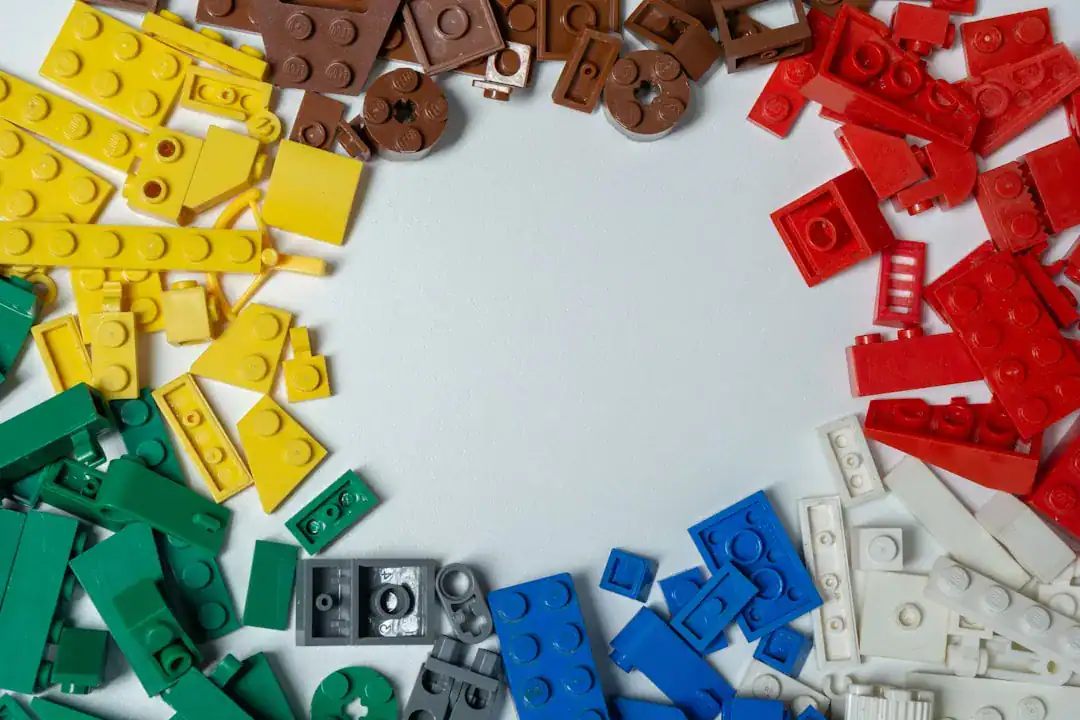
The progression of skills is visible. A toddler starts with gross motor movements, grabbing blocks with a full fist. As they engage with smaller LEGO Classic pieces, they must stabilize their arm and shoulder while using precise finger movements to place a single 1×1 stud. This separation of movements is a critical milestone in physical development.
Unlocking Cognitive Growth Through Spatial Reasoning
Spatial reasoning—the ability to visualize and manipulate objects in 3D space—is a strong predictor of future success in STEM fields. Creative bricks are arguably the best analogue tool for teaching this skill.
From Mental Images to Physical Reality
When a child builds from a set of instructions, they are practicing procedural processing. However, true spatial growth happens during open-ended play. Without a guide, the child must visualize a structure in their mind and reverse-engineer it using the available pieces.
Educational studies involving the “SPACE” program have shown that structured block play significantly improves mathematical abilities in young students. Teachers who prompted students to “visualize” and mental manipulate blocks helped them grasp concepts of symmetry, geometry, and balance. It is fascinating to see a child realize that two small triangles can form a square; that is practical geometry in action.
The Mathematics of Symmetry
Building is inherently mathematical. Children learn about patterns, sorting, and quantity without realizing they are doing math. They figure out that they need an even number of studs to create a symmetrical wing for a plane. This hands-on application of concepts like fractions (a 2-stud brick is half of a 4-stud brick) solidifies abstract ideas through tactile experience.
The Psychological Impact of Open-Ended Play
There is a distinct difference between “playing” and “following instructions.” While building a specific Star Wars ship is satisfying, the psychological benefits of open-ended play are far richer.
Entering the Flow State
Psychologists describe “flow” as a state of deep absorption where time seems to vanish. You see this when a child is hunched over a pile of mixed bricks, completely lost in their own world. This state promotes relaxation and reduces stress. Unlike competitive games, open-ended building has no “right” or “wrong” answer, which lowers anxiety and encourages risk-taking.
Creativity and Diversity
Interestingly, the diversity of colors inside a build—even those covered up by the outer shell—stimulates the brain. A diverse color palette encourages imagination. If a child runs out of grey bricks for a castle wall, they might substitute a blue one and decide it’s a “magic crystal” wall. This adaptation is the core of problem-solving. Industry data supports this, showing that adults and children alike use the tactile nature of bricks to unlock creative thinking that is often stifled by digital screens.
Conclusion and Actionable Suggestions
The humble plastic brick is a sophisticated developmental tool disguised as a toy. Its design—from the high-saturation colors that grab attention to the precise clutching power that trains fingers—is perfectly tuned to child psychology. To get the most out of this, you need to be an active participant in managing the play environment.
- Mix the Palettes: Don’t just stick to primary colors. Combine high-saturation sets with pastel or neutral tones to help children explore different moods and prevent visual fatigue.
- Ditch the Instructions: Once a set is built, encourage your child to break it down. Challenge them to build something entirely new using the same pieces to trigger spatial reasoning.
- Encourage Narrative: Ask your child why they chose specific colors. “Why is the roof red?” This connects their fine motor activity with verbal expression and emotional intelligence.
- Sort by Function, Not Color: Instead of sorting bricks by color (which looks nice but limits creativity), sort them by piece type. This forces the brain to make new color combinations they wouldn’t have chosen otherwise.
FAQ
Why do children prefer bright, saturated colors in toys?
High-saturation colors like red, yellow, and blue are easier for developing eyes to distinguish and naturally stimulate the brain’s arousal system, signaling excitement and energy.
How does LEGO play improve handwriting?
The manipulation of small bricks strengthens the intrinsic muscles of the hand and refines the pincer grasp. This physical strength and coordination are directly transferable to holding and controlling a pencil.
What is the difference between open-ended play and structured play?
Structured play involves following instructions to reach a specific goal, which teaches patience and sequencing. Open-ended play has no fixed outcome, which forces the child to use imagination, problem-solving, and spatial visualization to create something from scratch.
Can building blocks help with math skills?
Yes. Building requires constant calculation of size, symmetry, patterns, and fractions. Children physically manipulate “units” (studs), giving them a tangible understanding of arithmetic and geometry.
Is there an age limit for the benefits of fine motor skills training?
No. While crucial in early childhood, manipulating bricks continues to maintain dexterity and hand-eye coordination in adults and can even be used as a therapeutic tool for conditions impacting motor control.
References & Sources
- LEGO improves maths and spatial ability in the classroom (lboro.ac.uk)
- Building a flexible and creative mindset: U of A experts discuss … (news.arizona.edu)
- [PDF] Exploring positive psychology with LEGO® SERIOUS PLAY® (bu.edu)
- Lego® Therapy on cognitive skills in Autism Spectrum Disorders (pmc.ncbi.nlm.nih.gov)
- Disruptive Effects of Colorful vs. Non-colorful Play Area on … – PMC (pmc.ncbi.nlm.nih.gov)
- [PDF] LEGO As An Education Tool in Early Childhood (spark.parkland.edu)
CommentsTake the first comment