
Mastering the art of emblem design allows you to instantly project stability, heritage, and trustworthiness without saying a word. If you are an educational administrator, brand strategist, or designer working within the higher education sector, understanding the mechanics of these symbols is essential for maintaining institutional prestige. While modern minimalism dominates the tech world, academic branding still relies heavily on emblem logo design, official seal logos, and heraldry to secure brand authority in a competitive market.
Here are the core insights we will cover:
- Why “neo-nostalgia” makes heraldic symbols powerful tools for consumer trust.
- The strategic difference between an official seal and a marketing logo.
- How to deconstruct and modernize university crest designs for the digital age.
- Actionable steps to build an identity that balances history with functional scalability.
The Psychology of Neo-Nostalgia in Academic Branding
I have observed a fascinating trend in recent years: while consumer apps race toward flat, abstract icons, institutions that sell “authority”—like universities and law firms—are doubling down on complexity. This isn’t accidental. Industry analysis suggests that this “neo-nostalgia” allows modern brands to borrow visual cues from history to convey dignity and dependability.
When a potential student or donor sees a shield, a laurel, or a crest, their brain shortcuts to concepts of safety and established success. Research into modern heraldry indicates that these elements were originally designed for medieval battlefields to identify knights—literally a matter of life and death. Today, that same need for instant recognition drives academic branding. You aren’t just designing a logo; you are signaling that your institution has survived the test of time.
However, the challenge lies in execution. A logo that looks too historical can feel dusty and irrelevant. The goal is to use heraldic visual cues—like the shield (protection) or the book (knowledge)—but render them with clean lines that work on a smartphone screen. This balance is what separates a dusty relic from a powerful brand asset.
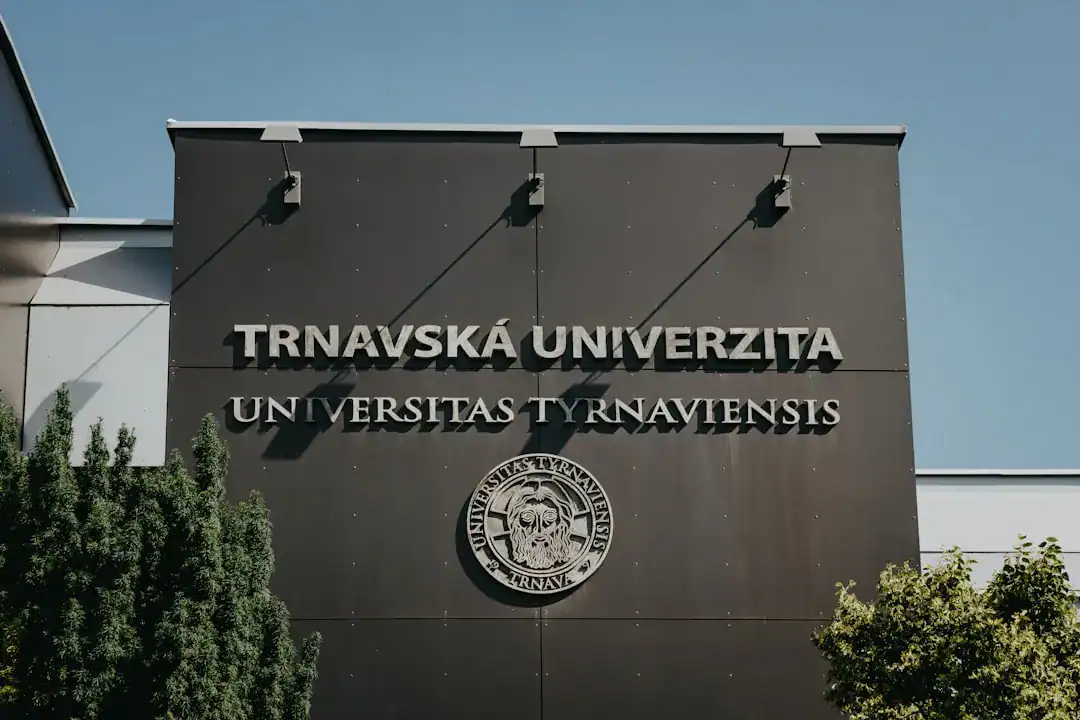
Anatomy of Authority: Deconstructing the University Crest
To build a logo that commands respect, you must understand the grammar of the crest. You cannot simply throw a lion and a banner together and hope for the best. University crest design follows a specific logic that has evolved over 800 years.
The Shield (Escutcheon)
The central element is almost always a shield. In the context of higher education, this represents the “seat” of knowledge. For example, Harvard’s crimson shield is not just a shape; it frames the three books of Veritas (Truth). If you are designing a new identity, the shape of the shield itself—whether heater-shaped, pentagonal, or Swiss—sets the tone. A flat-topped shield feels modern and academic, while an ornate, curved shield feels aristocratic.
The Charge and Symbols
What goes inside the shield matters. Heraldic traditions assign specific meanings to animals and objects.
- The Book: Universally signals learning and scripture.
- The Torch/Sun: Represents enlightenment (e.g., Oxford’s Dominus illuminatio mea).
- The Key: Symbolizes access to knowledge or secrets.
- Specific Mascots: Sometimes, unique creatures are used. The College of General Dentistry, for instance, uses an “opinicus” (a dragon-like creature) to symbolize professional distinctiveness.
The Motto
A ribbon with a Latin or English phrase usually sits beneath the shield. This is your brand promise condensed into three words. While “Veritas” is famous, your motto should reflect your specific niche. I prefer mottos that are legible even at small sizes, as complex calligraphy often turns into illegible mush on social media.
The Dual Identity Strategy: Official Seals vs. Marketing Logos
One of the most common mistakes I see in official seal logos is the attempt to use one mark for everything. Successful universities operate a “Dual Identity” strategy.
According to branding guidelines from institutions like the University of Rochester and UNC, there is a strict hierarchy:
- The Official Seal: This is the intricate, heraldic emblem used only for the most formal documents—diplomas, presidential inaugurations, and legal contracts. It is often circular, text-heavy, and difficult to reproduce at small sizes.
- The Academic Marketing Mark: This is a simplified version, often extracting just the shield or a monogram (like the “unc” or a block letter). This mark is used for websites, merchandise, and recruitment ads.
If you try to use your intricate official seal as a profile picture on Instagram, you fail. The details get lost, and the authority vanishes. Instead, create a simplified emblem logo design that references the seal but strips away the non-essential text and filigree. This ensures your brand authority remains intact across all platforms.

Modernizing Heraldry: The Role of AI and Digital Tools
Redesigning an academic mark is risky. Alumni often revolt when they feel their history is being erased. However, sticking to a 100-year-old sketch is equally dangerous if it doesn’t render well on a mobile app. The solution is “evolutionary redesign”—keeping the core metaphor while updating the execution.
Balancing Tradition with Efficiency
Market data shows that responsive design is non-negotiable. Your emblem must have a “stackable” architecture: a version with the crest and text, a version with just the crest, and a version with just the wordmark.
For smaller institutions or new educational startups that need to establish immediate credibility without the six-figure agency price tag, technology offers a bridge. Advanced tools like Ailogocreator utilize deep learning to generate emblem designs that adhere to these heraldic principles while ensuring the output is vector-ready and scalable. By inputting keywords related to your academic focus (e.g., “science,” “law,” “tradition”), you can generate concepts that follow the “shield + symbol + text” formula instantly. This allows you to prototype a “branded house” architecture efficiently, ensuring your marketing logo matches the gravitas of your official mission.
Color Psychology in Emblems
Color is the emotional anchor of your emblem.
- Crimson/Red: Passion, energy, and power (e.g., Harvard).
- Blue: Trust, intelligence, and calm (common in tech and law schools).
- Gold/Yellow: Excellence and history.
- Purple: Royalty and creative wisdom.
When modernizing, resist the urge to add gradients. Solid, flat colors communicate confidence. A flat blue shield looks authoritative; a shiny, 3D blue shield looks like a web button from 2005.
Best Practices for Designing Authoritative Emblems
To ensure your emblem logo effectively communicates brand authority, follow these technical rules derived from design theory and successful case studies.
- Simplify the Stroke Width: Traditional coats of arms often have varying line weights that look messy when shrunk. Standardize your stroke width. If your shield has a thick outline, ensure the inner symbols match that visual weight.
- Limit the Palette: Restrict your primary emblem to 2 colors, with a maximum of 3 for accents. This ensures the logo is cheaper to print on merchandise and easier to read.
- Typography is King: The font inside or around your emblem must match the era you are evoking. Serifs (like Garamond or Trajan) imply history. Sans-serifs imply modernity. Never mix more than two typefaces in a single emblem.
- Negative Space: Use negative space to define shapes rather than drawing every line. The eye fills in the gaps, making the logo cleaner and more memorable.
FAQ
Q: What is the difference between a logo and a crest?
A: A crest is specifically the element that sits above the helmet in a coat of arms, though colloquially, people use “crest” to refer to the entire shield design. A logo is a broader term for any graphic mark used to identify a brand. In academia, the “logo” is often a simplified stylization of the traditional “coat of arms.”
Q: Can a new university use heraldry without looking fake?
A: Yes, but it requires restraint. Avoid using symbols you haven’t earned (like royal crowns). Instead, use geometric shields and abstract representations of your core values (e.g., a lamp for guidance). This creates “neo-nostalgia”—a sense of history without deception.
Q: Why do universities have two different logos?
A: They serve different functions. The “Official Seal” is for legal and ceremonial validation (like a signature). The “Identity Mark” or “Logo” is for communication, marketing, and digital presence. Using the seal for marketing dilutes its prestige and often causes legibility issues.
Q: How important is the shape of the shield?
A: The shape dictates the personality. A “Heater” shield (classic iron-shape) feels medieval and defensive. A “Square” or “French” shield feels more structured and civic. Round seals are traditional for official documentation but harder to use as a central logo element.
Conclusion and Actionable Suggestions
Building an academic identity that commands respect requires a careful blend of historical reverence and modern utility. Your emblem is the visual anchor of your reputation; it must look as good on a sweatshirt as it does on a doctoral diploma.
- Audit Your Assets: Determine if you need a “Dual Identity” system. If you are using a complex seal for Instagram, stop immediately and commission a simplified “marketing mark.”
- Respect the Hierarchy: Ensure your primary university logo dominates all sub-brands (departments, schools). Do not allow individual departments to create rogue logos that dilute the main brand authority.
- Leverage Smart Tools: Use efficient design platforms like Ailogocreator to prototype scalable emblem variations that respect heraldic rules without getting bogged down in manual drafting.
- Define Your Symbols: Select 1-2 core symbols (book, shield, torch) that tell your specific story. Do not clutter the shield with too many elements.
- Test for Scalability: Before finalizing any emblem logo design, shrink it to 50 pixels wide. If the text or symbols become unrecognizable, simplify the design until they remain clear.
References & Sources
- [PDF] Heraldry, mottos, and corporate heritage discovery at the University … (bura.brunel.ac.uk)
- [PDF] The Coat of Arms of the Present Age – The Brand – ARC Journals (arcjournals.org)
- Create compelling brand identities using graphic design techniques (vfs.edu)
- Armorial of British universities (en.wikipedia.org)
- The Impact of Logo Design on Educational Branding: A Study on … (europeanbusinessmagazine.com)
- [PDF] BRANDING AND IDENTITY GUIDELINES (identity.unc.edu)
- Brand Architecture (brand.rochester.edu)
- Signaling Change Through University Logo Redesign – Yes& Insights (insights.yesandagency.com)
- [PDF] Logo Design Basics (www2.latech.edu)
- Brand Elements – Brand Standards – Iowa State University (brandmarketing.iastate.edu)
- Steven Heller’s Evolution: On University Logos and Seals (printmag.com)
- Internal Perspectives on Visual Identities in Higher Education – PMC (pmc.ncbi.nlm.nih.gov)
- [PDF] THE POWER OF BRANDING IN HIGHER EDUCATION (ijecm.co.uk)
- From The Archives: A legacy in design – Gettysburg College (gettysburg.edu)
- University Logos: What’s Changed And Why It Matters (icdindia.com)
CommentsTake the first comment