
Mastering the mechanics of identity construction in screenwriting allows you to build characters that resonate globally, not just entertain locally. If you are a screenwriter, brand storyteller, or narrative designer, understanding the rigidity and fluidity of Disney’s script structures offers a blueprint for emotional engagement. Disney storytelling does not just adapt fairy tales; it re-engineers Fairy tale archetypes and Screenwriting structure to fit a specific, often sanitized, commercial mold. By dissecting Disney character arcs and the Hero’s Journey, we see that identity in these scripts is less about self-discovery and more about role performance within a strict narrative grid.
Here are the core mechanisms behind this identity engineering:
- Disney strips complex folklore of its darker, mature lessons to prioritize romance and binary morality.
- The “I Want” song functions as a script device to explicitly state the protagonist’s internal goal within the first 15 minutes.
- Identity is often externalized through visual transformation, though this sometimes leads to problematic erasure of the character’s physical self.
- The structural formula relies heavily on “orphanhood” to force immediate independence and rapid character growth.
The Sanitization of Folklore Archetypes
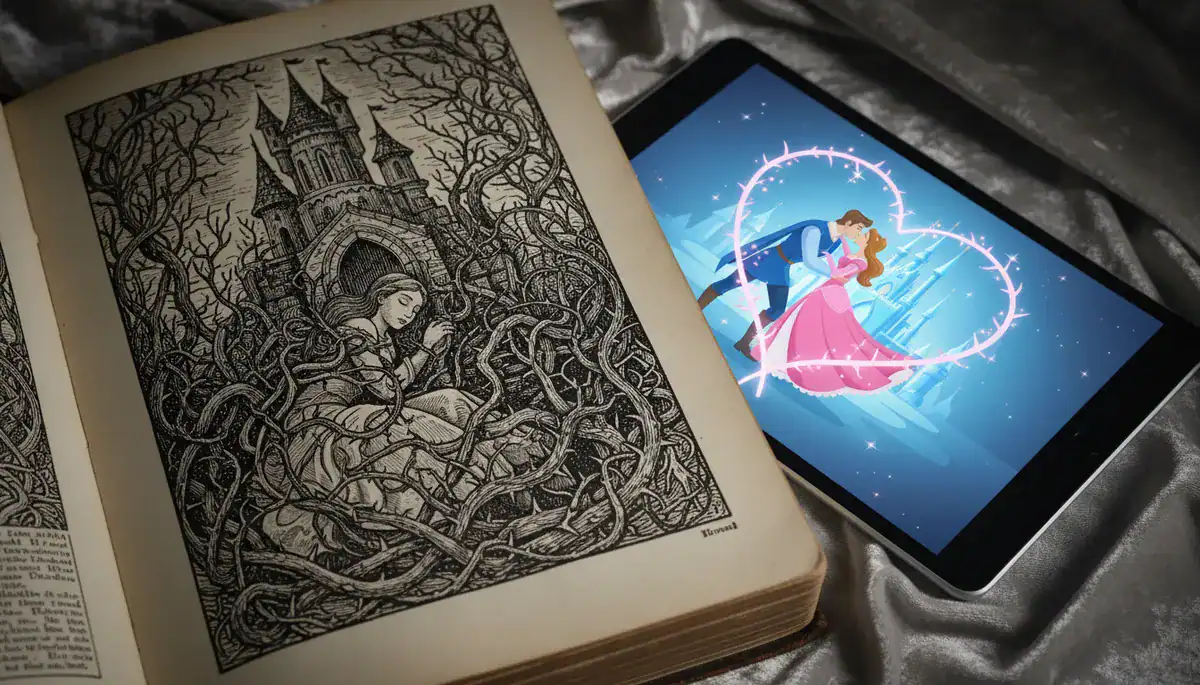
When I look at the transition from oral folklore to Disney storytelling, the shift is aggressive. Original fairy tales often served as warnings or complex rites of passage for adolescents. However, academic analysis of folklore adaptations indicates that Disney systematically removes these “darker elements” that originally taught life lessons. Instead of the messy, ambiguous growth found in traditional stories, the scripts substitute a polished, Hollywood version of identity focused almost exclusively on romance and external validation.
For instance, in the original Sleeping Beauty, the narrative dealt with the heavy themes of adulthood and dormant potential. In the animated script, this is replaced by a binary conflict between a powerful villain and a prince on a quest. The identity of the protagonist is reduced to a prize to be won, rather than a person growing. This “Disneyfication” creates a Screenwriting structure where Fairy tale archetypes are flattened. The nuances of the “Crone” or the “Trickster” are often erased to ensure the “Hero” and “Villain” stand in perfect, marketable contrast.
If you are writing a script, you must decide: do you want the safety of these flattened archetypes, or the resonance of the original messy folklore? The Disney model proves that simplification sells, but it often sacrifices the psychological depth that makes a story linger in the psyche of an adult audience.
The “I Want” Song as a Structural Pillar
In Disney character arcs, identity is rarely subtle. It is announced loudly, usually in D major. Narrative experts point out that the “I Want” song is not just a musical interlude; it is a structural necessity in the script that defines the protagonist’s identity before the second act begins. This Narrative trope serves a dual purpose: it creates an emotional bond with the audience and sets clear parameters for the Hero’s Journey.
From The Little Mermaid to Moana, the protagonist articulates their dissatisfaction with the status quo. This technique solves a major screenwriting problem: exposition. Instead of wasting pages on dialogue explaining why a character is unhappy, the script uses a three-minute musical number to cement their identity as a “dreamer” or “outsider.”
However, this formula can feel mechanical. When every character’s identity is defined by a singular desire for “more,” it limits the scope of what a hero can be. They are rarely content builders or complex thinkers; they are always restless seekers. For modern storytellers, this is a trap. While efficient, it risks making your characters feel like carbon copies of a corporate template rather than unique individuals.
Visual Identity and the Problem of Erasure
A critical look at recent Disney character arcs reveals a troubling trend in how identity is handled visually. While white protagonists often get to explore their identities while remaining human, minority characters frequently undergo physical transformations that erase their visual identity for the majority of the film.
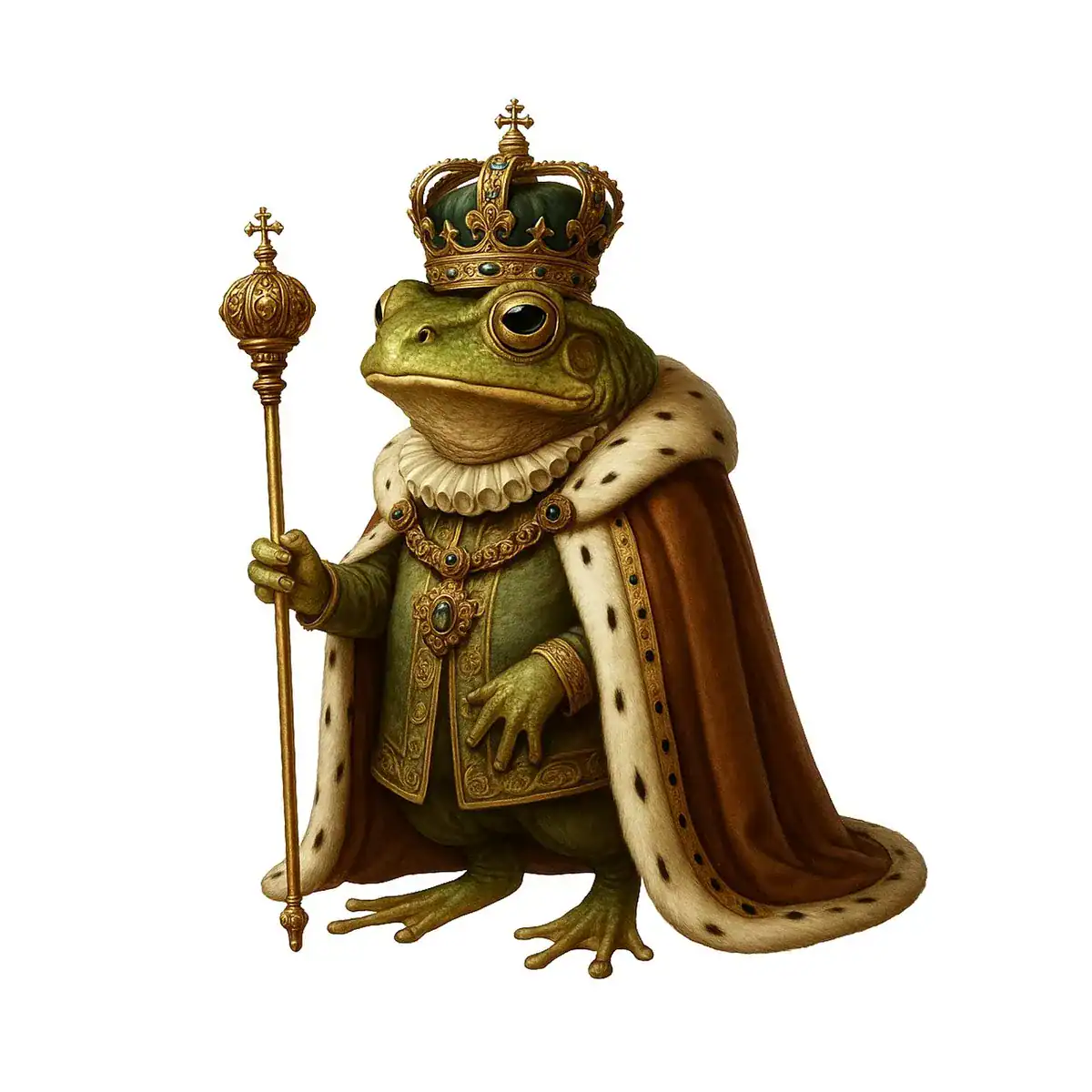
Critics have noted that in films like The Princess and the Frog and Soul, the protagonists spend significant screen time as animals or blue blobs. This narrative choice undermines the visual affirmation of their identity. In screenwriting terms, if your character spends Act 2 and most of Act 3 as a frog or a cat, you are limiting their ability to express identity through human nuance and body language.
Visualizing Identity in the Digital Age
This issue of visual representation extends beyond film. In the digital world, defining a clear visual identity is just as critical as it is in a script. Whether you are building a character or a brand, the visual mark you leave matters. For creators looking to establish a quick, professional visual start for their projects, tools like Ailogocreator provide an efficient way to generate visual identities that stick, much like a well-designed character silhouette.
The Orphan Trope and Forced Independence
Why are so many Disney protagonists orphans? It is not just a coincidence; it is a script shortcut. Industry analysis of Screenwriting structure suggests that removing parents removes the safety net. This forces the protagonist into immediate agency. If the parents were alive and competent, the Hero’s Journey would end before it began because the parents would solve the problem.
By killing off or removing the parents (Bambi, Simba, Elsa/Anna), the scriptwriter forces the character to construct their own identity without familial guidance. This aligns with the “individuation” process described in psychoanalytic film theory. The character must confront the world alone to become a “self.”
FAQ
Q: How does the Hero’s Journey differ in Disney films compared to classical mythology?
A: Disney’s version is often highly compressed and sanitized. While Joseph Campbell’s model includes complex stages like “Atonement with the Father,” Disney scripts often simplify this into a physical battle or a chase sequence. The internal psychological change is often externalized into a clear “victory” moment.
Q: Why are archetypes important in screenwriting?
A: Archetypes provide a shorthand that audiences instantly recognize, such as the Mentor or the Shapeshifter. This allows the writer to skip exposition and jump straight into the plot. However, relying on them too heavily can make a story feel predictable and flat.
Q: Has Disney’s portrayal of female identity changed over time?
A: Yes, significantly. Early princesses like Snow White were passive observers of their own stories. Modern scripts, starting from the Renaissance era (The Little Mermaid) to the Revival era (Frozen), script female characters with more agency, though they still often operate within the confines of commercial expectations.
Q: What is the “Script Velocity” mentioned in drama analysis?
A: Script velocity refers to the speed at which characters switch roles (e.g., from Victim to Rescuer) within a scene. High velocity creates suspense and engagement, while low velocity can lead to boredom. Disney films typically maintain high velocity to keep young audiences engaged.
Conclusion and Actionable Suggestions
Disney’s mastery of script identity is not magic; it is a rigorous industrial process. They utilize specific psychological triggers and structural shortcuts to ensure mass appeal. To apply these lessons to your own writing or brand storytelling:
- Define the “Want” Early: Do not leave your audience guessing. Within the first 10% of your narrative, clearly establish what your protagonist lacks and what they crave.
- Challenge the Orphan Trope: Try writing a character who must find their identity while navigating complex family dynamics, rather than just eliminating the parents for convenience.
- Visual Consistency: Ensure your character’s internal identity matches their external presentation. Avoid stripping away their defining physical traits for the sake of a “transformation” gimmick.
- Use Archetypes as a Base, Not the Whole Building: Start with a recognizable archetype (e.g., the Warrior), but subvert it by adding a contradictory trait (e.g., a Warrior who hates conflict).
- Study the Source Material: Read the original fairy tales. The darker, weirder elements that Disney removed often contain the raw human truths that modern audiences are starving for.
References & Sources
- [PDF] FAIRY TALES AND SCRIPT DRAMA ANALYSIS (karpmandramatriangle.com)
- [PDF] Character Archetypes in Disney/Pixar Animated Films (marist.edu)
- [PDF] Narrative performance in Disney’s The Little Mermaid. (digital.library.unt.edu)
- [PDF] Psyche, Archetype, and Ideology: A Comparative Film … – ijrti (ijrti.org)
- Disney’s High School Musical and the construction of the tween … (journals.sagepub.com)
- [PDF] Drama at Disney: A Thematic Analysis of Creative Worker … – IAFOR’s (iafor.org)
- [PDF] DEPICTIONS OF FEMALE PROTAGONISTS IN DISNEY FAIRY … (scholarsbank.uoregon.edu)
- [PDF] A Qualitative Examination of Fairy-Tales and Women’s Intimate … (aura.antioch.edu)
- [PDF] Well-Being in Disney Animated Feature Films, 2013–2023 (scholarworks.waldenu.edu)
- [PDF] The Psychosocial Implications of Disney Movies – Loc (tile.loc.gov)
- Reinventing Fantasy: The Reception of Fairy Tales (scirp.org)
- [PDF] The evolution of Disney princesses and their effect on body image … (commons.lib.jmu.edu)
- [PDF] The Subversion of Identity from Princesses to Queens – A Cultural … (pdfs.semanticscholar.org)
CommentsTake the first comment