
Mastering the art of hidden visual cues can turn a static logo into a powerful psychological trigger that builds instant customer loyalty. If you are a brand strategist, entrepreneur, or designer, understanding the mechanics behind successful visual identity is crucial for standing out in a crowded market. The famous Amazon logo meaning goes far beyond a simple swoosh; it is a masterclass in Subliminal marketing, Logo psychology, and Brand storytelling that communicates value without saying a word.
Here are the core lessons we can decode from this iconic design:
- How the “pareidolia effect” creates instant trust through visual smiles.
- The strategic use of directional cues to explain business models (A to Z).
- Why “Easter eggs” turn passive viewers into engaged brand advocates.
- Practical ways to test and implement hidden meanings in your own design.
The Psychology of the Smile: Why We Trust Curves
I have always believed that the most effective design elements are the ones you don’t notice immediately. When you look at the Amazon logo, your conscious brain sees a name, but your subconscious brain registers a face. This is rooted in Logo psychology. Humans are hardwired to recognize facial features in inanimate objects, a phenomenon known as pareidolia.
The orange arrow creates a perfect upward curve, mimicking a genuine smile. Industry analysis shows that brands utilizing “smiling” or anthropomorphic imagery are perceived as more trustworthy and approachable. It is not just a line; it is a visual handshake. The stroke begins slightly thinner and thickens towards the middle, resembling the natural movement of lips widening in delight.
For any business, the lesson is clear: rigid, sharp angles convey authority, but curves convey humanity. If your goal is Customer satisfaction and approachability, softening your visual edges can lower the psychological barrier to entry for new clients.
From A to Z: The Narrative of Infinite Selection
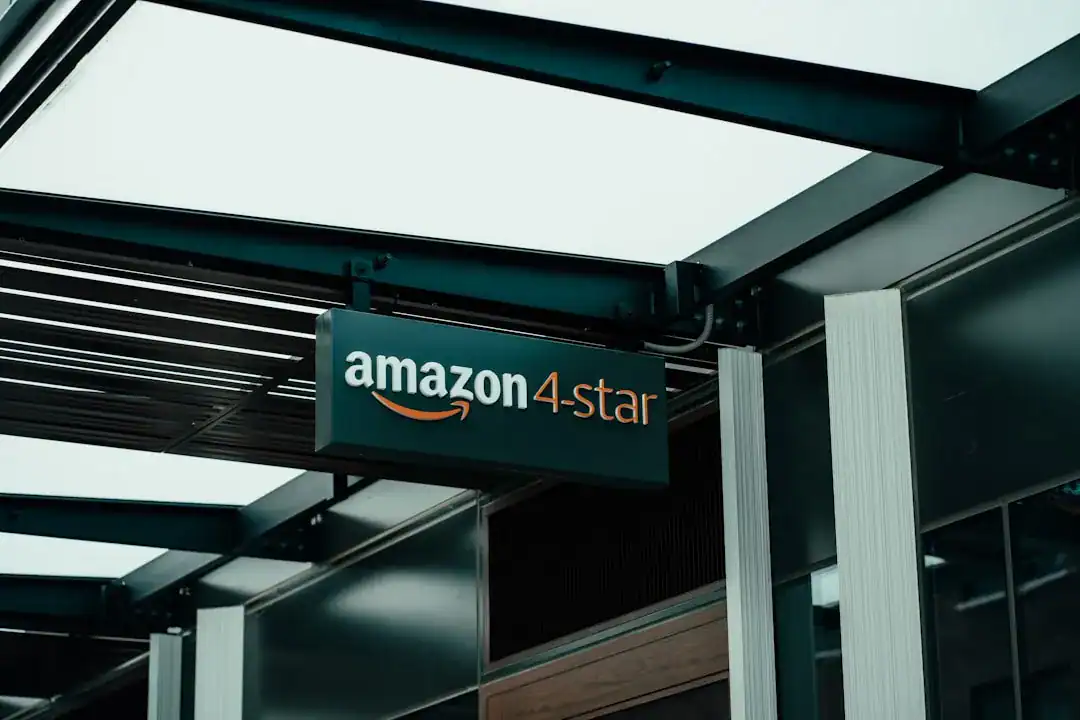
While the smile builds emotional connection, the structural placement of the arrow handles the logical side of Brand storytelling. The arrow starts at the letter “a” and ends at the letter “z.” This is the definitive “Easter egg” that transformed Amazon from a bookstore into the “everything store.”
This design choice is a textbook example of Visual identity design efficiency. It solves a complex communication problem—”How do we tell people we sell everything?”—with a simple directional line. It is a subliminal map of their inventory.
Why this matters for your brand:
- Clarity: It defines the scope of service instantly.
- Motion: The arrow suggests forward movement and delivery speed.
- Connection: It visually links disparate elements (A and Z) into a cohesive whole.
When I analyze successful logos, I look for this kind of “narrative density.” You don’t need a tagline if your graphic elements are doing the talking.
The Strategic Use of Color Contrast
We often focus on the shape, but the color palette carries half the weight of the Amazon logo meaning. The logo uses a stark contrast between black and orange.
- Black (The Text): Represents dominance, elegance, and professionalism. It anchors the brand as a serious technology and logistics giant.
- Orange (The Smile): Represents energy, playfulness, and happiness. It disrupts the seriousness of the black text.
This duality is essential. If the logo were entirely orange, it might look too childish for a tech giant. If it were entirely black, it would feel cold and corporate. By balancing these, the design achieves a “professional yet friendly” tone. Subliminal marketing relies heavily on these color associations to set the mood before the customer even reads the company name.
Gamification of Branding: The Power of “Easter Eggs”
Why do we care about hidden meanings? Because discovering them makes us feel smart. Branding Easter eggs are a reward for the attentive consumer. When a customer realizes, “Oh, the arrow points from A to Z!”, they feel an “insider” connection to the brand.
This moment of discovery converts a passive consumer into an active participant. They are likely to share this trivia with friends, effectively becoming organic brand ambassadors. In an era where attention is the scarcest resource, embedding a layer of mystery or wit into your Visual identity design encourages people to look twice.
How to Iterate and Test Your Own Hidden Meanings
You might be thinking, “I don’t have the budget of a tech giant to hire agency psychologists.” The good news is that technology has democratized high-level design thinking. You can now experiment with negative space, symbolic icons, and font combinations rapidly.
Using intelligent platforms like Ailogocreator allows you to generate multiple variations of a concept in minutes. You can test how a curved line changes the mood of your text or how a subtle icon insertion alters the message. The key is iteration. I recommend generating 20-30 variations to see which “hidden” element feels natural rather than forced. Efficient tools help you visualize these Branding Easter eggs without getting bogged down in technical drawing early in the process.
FAQ
What is the main meaning behind the Amazon logo?
The logo features an orange arrow that resembles a smile, symbolizing customer happiness. Additionally, the arrow points from the letter “A” to “Z,” representing the company’s vast selection of products.
How do Easter eggs in logos help marketing?
Hidden meanings or “Easter eggs” create a sense of discovery for the audience. This deepens engagement, makes the brand more memorable, and encourages word-of-mouth sharing as people explain the “secret” to others.
What is subliminal marketing in design?
It involves using visual cues—like colors, shapes, or negative space—to convey a message to the consumer’s subconscious without them explicitly realizing it. For example, using blue to instill a feeling of trust or arrows to suggest speed.
Can small businesses use logo psychology effectively?
Absolutely. Simple adjustments like font choice (serif vs. sans-serif), color theory, and the use of curves can significantly impact how a brand is perceived, regardless of the company size.
Conclusion and Actionable Suggestions
The genius of the Amazon logo isn’t just that it looks good; it’s that it works hard. It tells a story, triggers a chemical reaction in the brain (a smile), and defines the business model all at once. To replicate this success in your own branding efforts, you need to move beyond aesthetics and think about function and psychology.
Here are my practical recommendations for applying these principles:
- Audit your current visual assets: Does your logo convey your core service? If you sell speed, do your lines move forward? If you sell security, is your font stable and bold?
- Test for Pareidolia: Show your design to fresh eyes. Do they see a face, an emotion, or a gesture? Ensure it is a positive one.
- Use the “A to Z” Logic: Identify the start and end points of your customer’s journey. Can you connect them visually in your icon?
- Leverage Contrast: Don’t stick to a monochrome palette if your brand personality has two sides (e.g., Serious Data + Fun Interface). Use color to bridge the gap.
- Iterate with AI: Don’t settle for the first sketch. Use tools like Ailogocreator to explore how subtle shifts in spacing and iconography can reveal hidden shapes or meanings.
CommentsTake the first comment