
Unlock the secrets of emotional branding by understanding how a single hidden word transformed the perception of a global fast-food giant. If you are a marketer, designer, or business owner looking to deepen consumer loyalty, the psychology behind Wendy’s 2013 redesign offers a masterclass in subtlety. This analysis explores the fascinating intersection of subliminal advertising, logo design psychology, and the concept of brand warmth found in the legendary “MOM” collar.
- The “Happy Accident” Theory: Why Wendy’s official denial of the hidden message might actually help their brand image.
- Psychological Triggers: How associating “Mom” with fast food bridges the gap between industrial processing and home-cooked comfort.
- Visual Strategy: The shift from busy graphics to emotional minimalism in modern branding.
- Market Impact: Real-world data suggesting how logo refreshes correlate with sales performance.
The “MOM” in the Collar: Intentional Genius or Design Fluke?
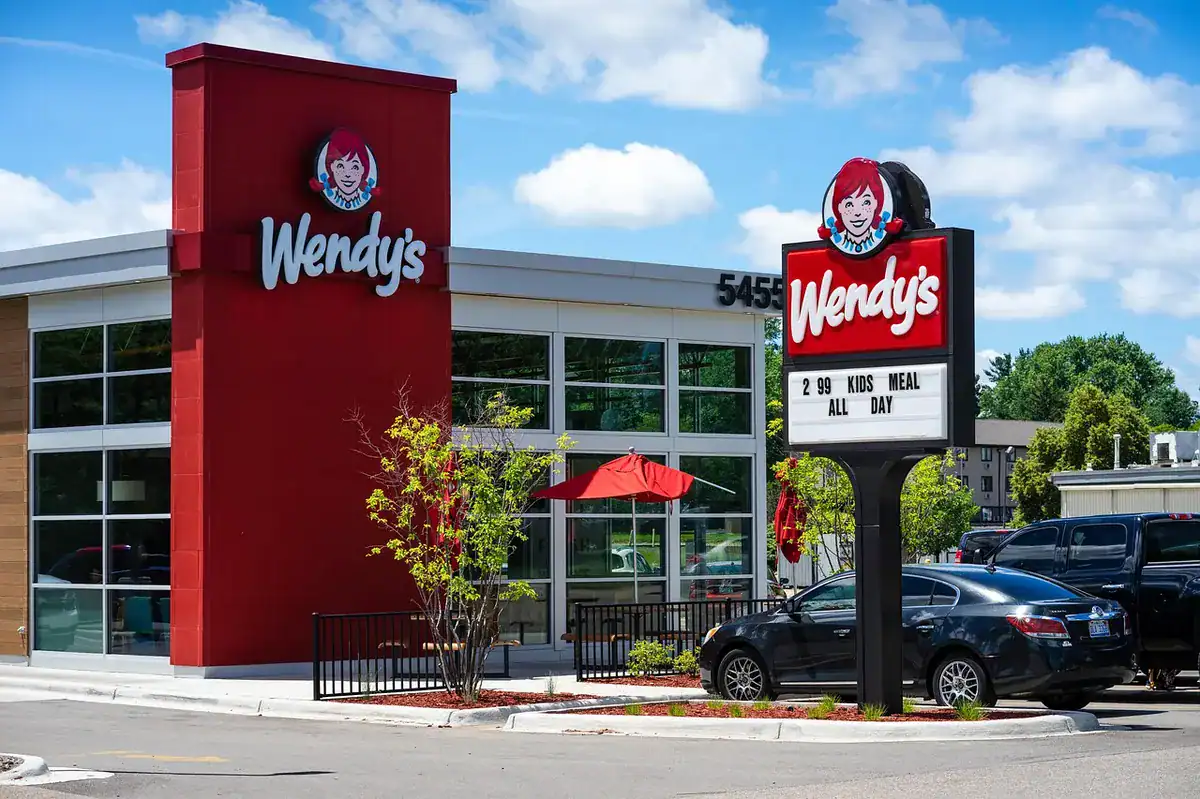
In 2013, Wendy’s unveiled its first major logo update in nearly 30 years. The design was cleaner, friendlier, and featured a more mature-looking Wendy. But what caught the internet’s attention wasn’t the new font or the removal of the “Old Fashioned Hamburgers” text—it was the ruffled collar. If you look closely at the blue and white stripes of Wendy’s collar, the word “MOM” appears to be spelled out vertically.
I find this detail fascinating because it sparked a massive debate about intent. According to company spokespeople at the time, this was completely unintentional. They claimed they were surprised when design blogs pointed it out. However, I have a hard time believing that a multi-million dollar rebranding effort, likely involving dozens of designers and focus groups, missed such a clear detail.
Whether accidental or not, the placement is perfect. It sits right at the throat, the center of voice and nurturing. This creates a “Rorschach test” for consumers; once you see it, you cannot unsee it. This viral discovery did more for their publicity than a standard press release ever could. It turned a corporate logo into a conversation piece, forcing people to stare at the brand mark for extended periods to “decode” the secret.
Why “Mom” is the Ultimate Emotional Trigger
The brilliance of this hidden message lies in its psychological payload. Fast food is often criticized for being processed, industrial, and unhealthy—the exact opposite of a home-cooked meal. By embedding the word “MOM” into the icon, the brand subtly taps into the concept of brand warmth.
Industry analysis suggests that our brains are hardwired to trust references to family and maternal figures. A survey noted by branding experts indicated that a significant portion of men prefer their mother’s cooking over anyone else’s. By linking the Wendy’s icon with “Mom,” the brand subconsciously suggests that their food carries the same care, safety, and love as a meal prepared at home.
This is logo design psychology at its finest. It bypasses the logical brain (which knows it’s a fast-food burger) and speaks directly to the emotional brain (which craves comfort). I believe this helps soften the corporate image, making the chain feel like a neighborhood kitchen rather than a faceless conglomerate.
The Business Impact of Subliminal Warmth
Does a hidden word really sell more burgers? The data suggests a correlation. Reports following the 2013 rebranding indicated that stores adopting the new logo saw a sales increase of roughly 25%. While we cannot attribute this entirely to the word “MOM,” the refreshed identity played a massive role in revitalizing the brand.
Subliminal advertising often gets a bad rap as “mind control,” but in this context, it acts more like an emotional anchor. It reinforces the brand’s narrative of “quality” and “freshness.” When you see the logo, you aren’t just seeing a girl with pigtails; you are processing a complex symbol of Americana and family values.
From my perspective, the success here isn’t just about a hidden word; it’s about the feeling that the word evokes. It aligns perfectly with Wendy’s long-standing marketing strategy of positioning themselves as a cut above other fast-food competitors in terms of food quality. The “MOM” detail—subconscious or not—validates that positioning.
Modern Minimalism and Tool-Assisted Creativity
The 2013 redesign also marked a shift towards minimalism. The old logo was cluttered with scrollwork and extra text. The new version zoomed in on the face, making it more personal. This simplicity is what allowed the “MOM” detail to stand out. In a busy, complex logo, such a subtle touch would have been lost in the noise.
For modern businesses, this teaches a vital lesson: less is often more. When you strip away the excess, you create room for meaning.
Creating a logo that balances simplicity with deep emotional resonance used to require expensive agencies. However, technology has democratized this process. Today, smart tools like Ailogocreator allow entrepreneurs to experiment with minimalist designs and subtle abstract shapes rapidly. While AI might not intentionally hide “MOM” in a collar (yet), it provides the efficiency needed to iterate through hundreds of concepts, increasing the likelihood of finding that perfect, resonant design that feels “human.”
Emotional Branding vs. Traditional Marketing
The Wendy’s case highlights the difference between selling a product and building a brand. Traditional marketing says, “We have square burgers.” Emotional branding says, “We are family.” The “MOM” message supports the latter.
I think many brands fail because they focus too much on the explicit message. They shout about features and prices. Wendy’s whispered. By letting the customers “discover” the message themselves, they created a sense of ownership and inside knowledge among their fanbase. This is a powerful engagement tactic.
If you are building a brand identity, consider what your “hidden message” is. It doesn’t have to be a literal hidden word. It could be a negative space shape (like the FedEx arrow) or a color choice that evokes a specific memory. The goal is to create a moment of delight or recognition that sticks in the customer’s mind.
FAQ
Is the “MOM” in Wendy’s logo intentional?
Wendy’s officially denies it. A company spokesperson stated in 2013 that the appearance of the word “MOM” in the collar was unintentional. However, many designers and marketers believe it was a calculated subliminal move.
Where exactly is the hidden message in the logo?
Look at the ruffled collar worn by Wendy. The vertical blue stripes and the white space between them form the letters M-O-M. It is best viewed in the single-color or simplified versions of the logo.
Why did Wendy’s redesign their logo in 2013?
The company wanted to signal a transformation. They were remodeling restaurants, improving the menu, and wanted a contemporary look that signaled higher quality and freshness, moving away from the 1980s aesthetic.
Does subliminal advertising actually work?
Yes, but not as “mind control.” Subtle cues like shapes, colors, and hidden images can influence brand perception and emotional response, which helps build trust and affinity over time.
Conclusion and Actionable Suggestions
The story of Wendy’s hidden “MOM” teaches us that successful branding is often about the details we don’t immediately notice. It proves that emotional connection drives value just as much as the product itself. To apply these insights to your own work:
- Prioritize Simplicity: Remove clutter from your visual identity so that meaningful details can shine.
- Embed Emotion: Use shapes and colors that trigger the specific emotional response you want (e.g., warmth, trust, excitement).
- Create Discovery Moments: meaningful design elements that rewards customers for paying attention can create viral word-of-mouth.
- Iterate Frequently: Don’t settle for the first draft. Test different variations to see which ones evoke the strongest reaction.
- Align Visuals with Values: Ensure your hidden messages or subtle cues actually support your core brand promise (like “fresh food” connecting to “Mom”).
CommentsTake the first comment