
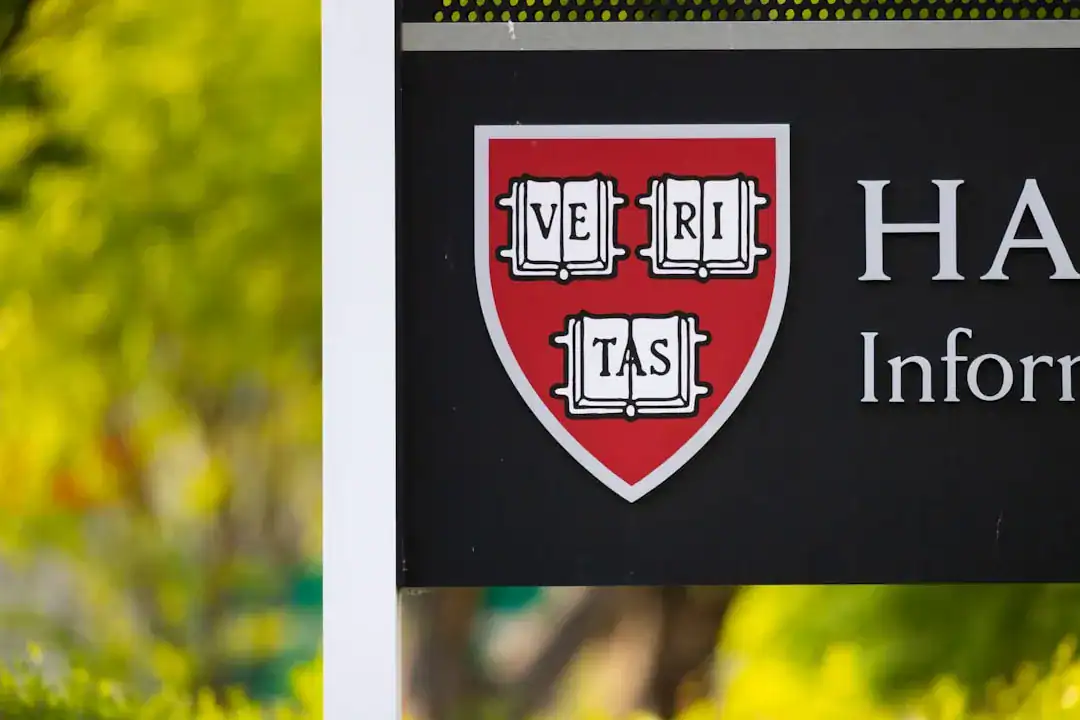
Building a brand identity that commands instant respect requires more than just good aesthetics; it demands a deep connection to history and values. If you are a university administrator, brand strategist, or a designer tasked with creating an institutional logo, understanding the weight of the Harvard Veritas shield is essential. This emblem is not merely a graphic; it is the definitive blueprint for Ivy League style, combining academic heraldry with a minimalist approach that has survived centuries of change.
Here are the core elements that define this iconic visual identity:
- Simplicity represents confidence: The restriction to three books and a single word avoids clutter.
- Color is currency: The specific use of Harvard Crimson (#A51C30) acts as a visual trademark for prestige.
- Adaptability is key: The design works as well on a smartphone screen as it does carved into stone gates.
- History validates the future: The “Veritas” motto connects modern education to 17th-century roots without feeling outdated.
The Anatomy of Authority: Decoding the Harvard Veritas Shield
When I look at the Harvard Veritas shield, I don’t just see a logo; I see a masterclass in restraint. In the world of university brand identity, there is often a temptation to over-design—to stuff a crest with eagles, banners, stars, and complex Latin phrases. Harvard resists this.
The design relies on three open books arranged on a shield. This specific arrangement is a nod to traditional academic heraldry, yet it strips away the decorative flourishes often found in European crests like those of Oxford or Cambridge. The three books symbolize the transmission of knowledge. Depending on the historical interpretation, the orientation of these books (sometimes with one face down) has sparked debates about the limits of human knowledge versus divine revelation. However, the modern iteration focuses on the openness of inquiry.
The typography is equally crucial. The word “VERITAS” is split across the books (VE-RI-TAS). It forces the viewer to engage with the shield to read the message. It is a bold design choice that places the institution’s core value—Truth—literally at the center of its visual representation. This is Ivy League style at its finest: conservative, deliberate, and undeniably powerful.
From “Christo et Ecclesiae” to “Veritas”: The Evolution of a Brand
It is fascinating to trace how Harvard logo meaning has shifted to match the times. Originally, the full motto was “Veritas Christo et Ecclesiae” (Truth for Christ and the Church), reflecting the university’s founding in 1636 as a training ground for clergy.
However, a brand that refuses to evolve eventually dies. In the 19th century, after the sketch was rediscovered by President Josiah Quincy in the archives (having been lost for nearly a century), the university moved towards the single word “Veritas.”
This was a strategic pivot. By shortening the motto, Harvard broadened its appeal. It signaled a shift from a purely religious institution to a secular powerhouse of research and logic. For modern designers, the lesson here is clear: collegiate crest design should honor the past but must not be shackled by it. The shield retains the feeling of the 1600s, but the message is perfectly attuned to the 21st-century pursuit of objective facts.
Defining Ivy League Style Through Academic Heraldry
The term “Ivy League style” often conjures images of tweed jackets and loafers, but in graphic design, it refers to a specific visual language of prestige. This language is built on the rules of heraldry.
The Harvard Veritas shield uses a “Chief” (the top section) and a field of color. The strict adherence to the Harvard Crimson color palette is what separates a generic school logo from a legendary brand. According to Harvard’s own design guidelines, the shield must never be altered, nor should it be placed on a background that clashes with its crimson value. This discipline is what creates “academic dignity.”
In my experience analyzing educational brands, institutions that fail often do so because they lack this consistency. They change colors every decade or modernize their shields into abstract swooshes. Harvard proves that sticking to a rigid heraldic structure actually builds more brand equity over time. It tells the world, “We are permanent.”

Why Minimalism Matters in University Brand Identity
We live in a digital-first world. A complex seal with intricate line work looks like a smudge on a mobile website header. The Harvard Veritas shield succeeds because it functions like a modern icon.
The high contrast between the crimson shield and the white books ensures legibility at any size. This is a critical principle of university brand identity today. While the official “seal” of a university might remain complex for diplomas, the primary logo—the “mark” used for marketing—must be simple.
I believe this is where many new institutions go wrong. They try to invent a heritage they don’t have by creating overly complex crests. Harvard’s shield is confident enough to be simple. The visual weight comes from the balance of the elements, not the quantity of detail.

Practical Lessons for Modern Collegiate Crest Design
If you are in the position of designing or refreshing an academic logo, you face a tough challenge: how to balance the “Ivy League” look with modern tools.
First, identify your “crimson.” Find a single, dominant color that can carry the emotional weight of your brand. Second, look for symbols of knowledge that are universal but arranged uniquely—like Harvard’s books. You don’t need to draw everything from scratch by hand. Modern design platforms can help you experiment with these classic layouts efficiently. For instance, tools like Ailogocreator allow users to generate logo concepts that utilize shield motifs and classic typography, providing a solid foundation for a dignified academic identity.
Finally, rigorously edit your text. If Harvard can reduce its entire mission down to one word, you probably don’t need a ten-word slogan on your logo.

FAQ
What is the meaning of the three books on the Harvard shield?
The three open books symbolize the pursuit of knowledge and truth. Historically, they have also represented the Holy Trinity or the relationship between human learning and divine revelation, though today they are primarily seen as icons of academic inquiry.
Why is the Harvard logo red?
The specific shade is known as Harvard Crimson. It was chosen by students in the 19th century (specifically by crew team members who wore crimson scarves to be seen during regattas) and was officially adopted as the university’s color in 1910.
Can the Veritas shield be used in different colors?
No. According to Harvard’s strict brand guidelines, the shield should only appear in Harvard Crimson, black, and white. Using other colors dilutes the brand identity and is generally prohibited in official communications.
What does “Veritas” mean in the context of the logo?
“Veritas” is Latin for “Truth.” It represents the university’s overarching mission to seek truth in all fields of study, transitioning from its original religious context to a broader academic and scientific commitment.
Conclusion and Actionable Suggestions
The Harvard Veritas shield is more than a logo; it is a lesson in how to manage reputation through design. It balances the weight of history with the clarity needed for the modern age.
To apply this Ivy League style to your own projects, consider these steps:
- Audit your elements: Remove any non-essential graphics from your current logo. If it doesn’t add meaning, it subtracts dignity.
- Standardize your palette: strict adherence to one or two core colors builds recognition faster than a varied palette.
- Respect the typography: Use serif fonts that convey age and authority, similar to the inscription on the Harvard Veritas shield.
- Embrace the shield: The shield shape is a universal signifier of protection and tradition—use it to frame your central icons.
- Focus on the motto: Choose a single word or short phrase that encapsulates your mission, just as “Veritas” does for Harvard.
References & Sources
- Brand and Identity | HarvardSites Design System (designsystem.harvardsites.harvard.edu)
- What is Harvard University’s motto and what does it mean? (sundialessayreview.com)
- How would you describe Harvard University’s current logo ‘veritas … (quora.com)
- Seal of approval: the long, swirling history of the Harvard ‘arms’ (hls.harvard.edu)
- Heraldry of Harvard University (en.wikipedia.org)
- New Shield Design Guidelines | Harvard Trademark Program (trademark.harvard.edu)
- Ivy League (clothes) (en.wikipedia.org)
- [PDF] Shield-Committee-Report.pdf – Harvard Law School (hls.harvard.edu)
- Harvard University Logo: Meaning, Colors, and Symbolism Explained (turbologo.com)
- Harvard shields (harvard.edu)
- Seal of approval – Harvard Gazette (news.harvard.edu)
- University Crest Standards | University Logos | Branding Style Guide (uu.edu)
- Behind the New HBS Brand Identity: Q+A with the Designers – News (hbs.edu)
- Policy on the Use of Harvard Names and Insignias (trademark.harvard.edu)
- The Ivy League: Variations: The Seal of Northwestern University (canvas.northwestern.edu)
CommentsTake the first comment